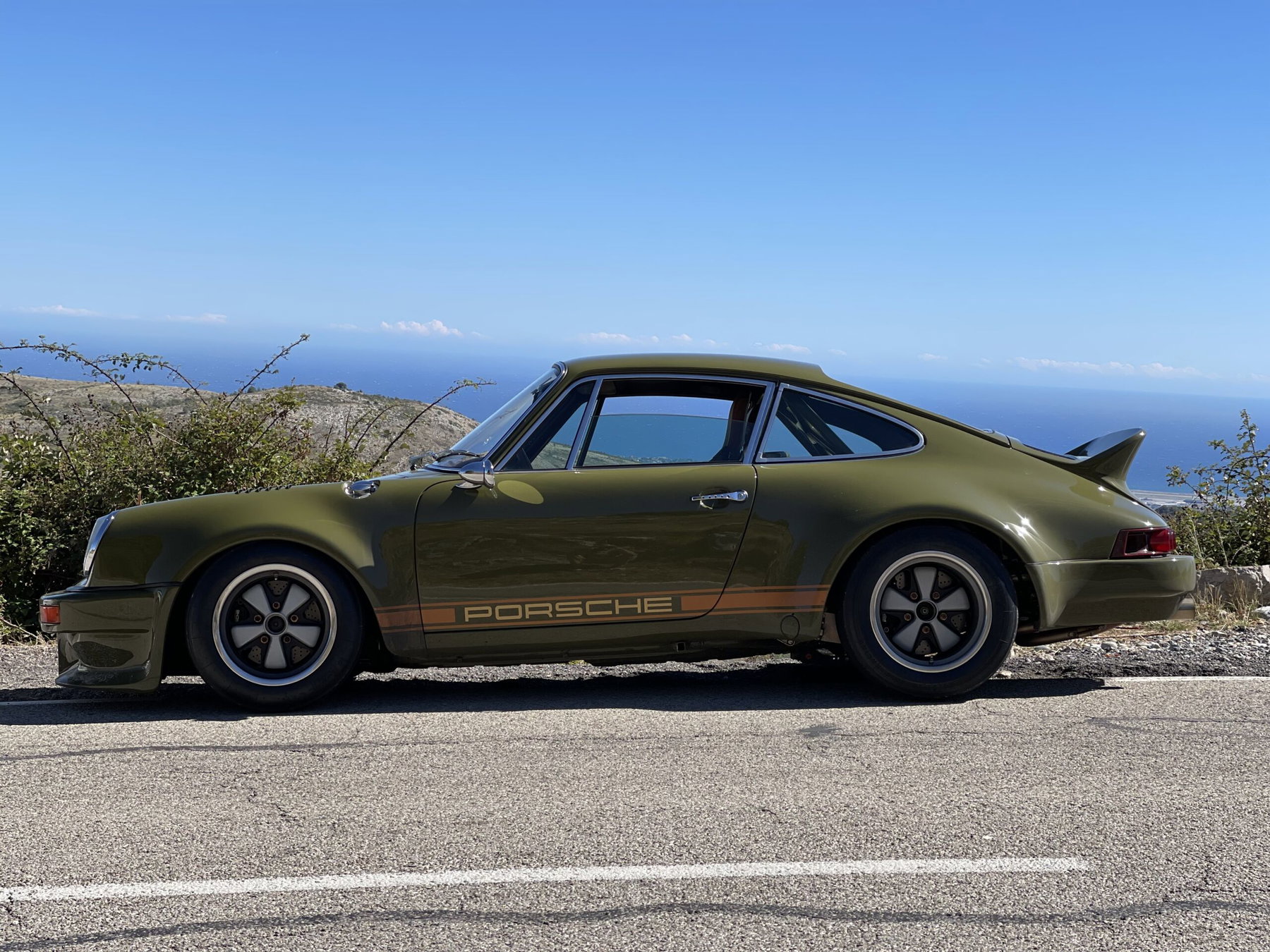
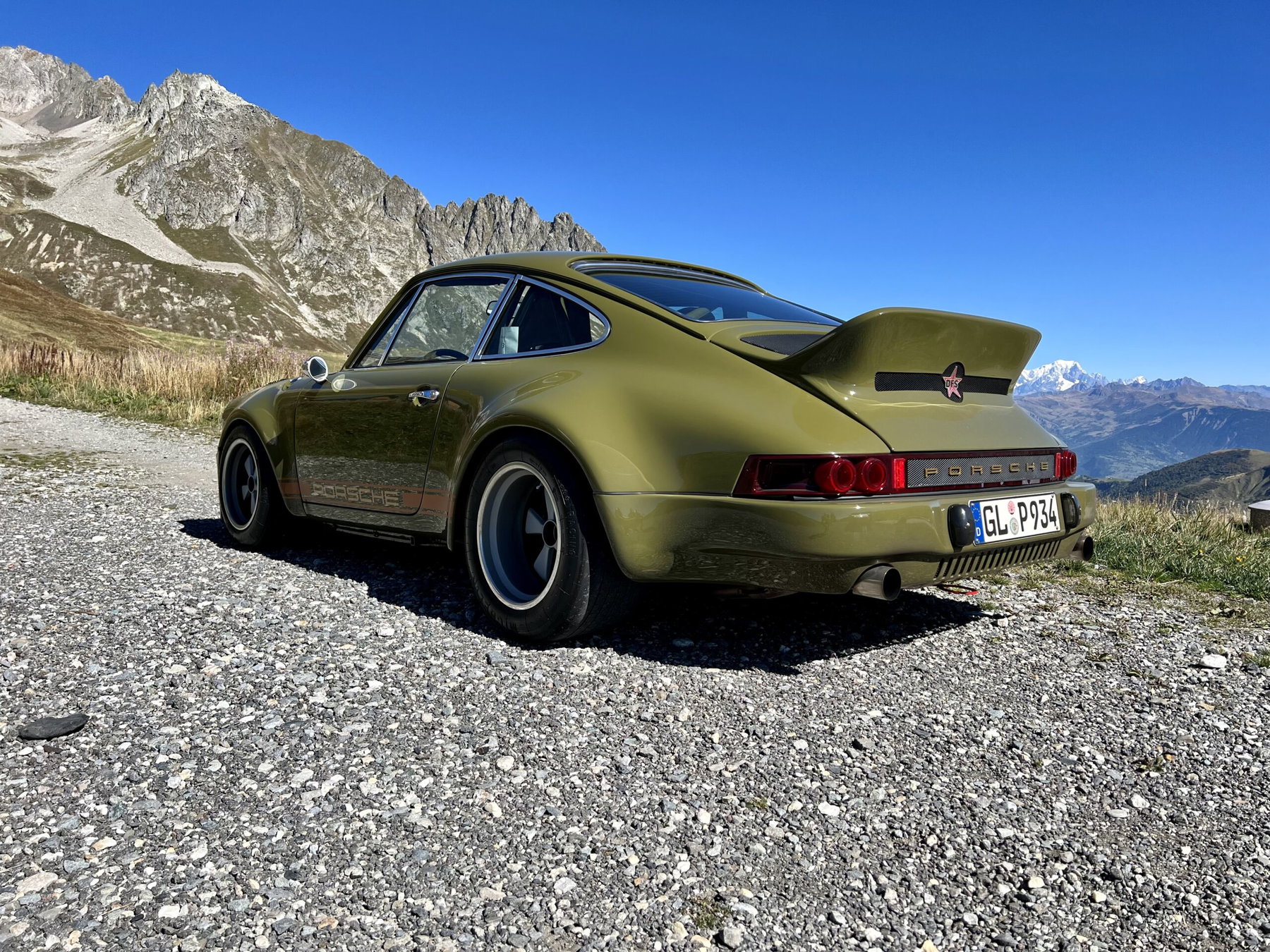
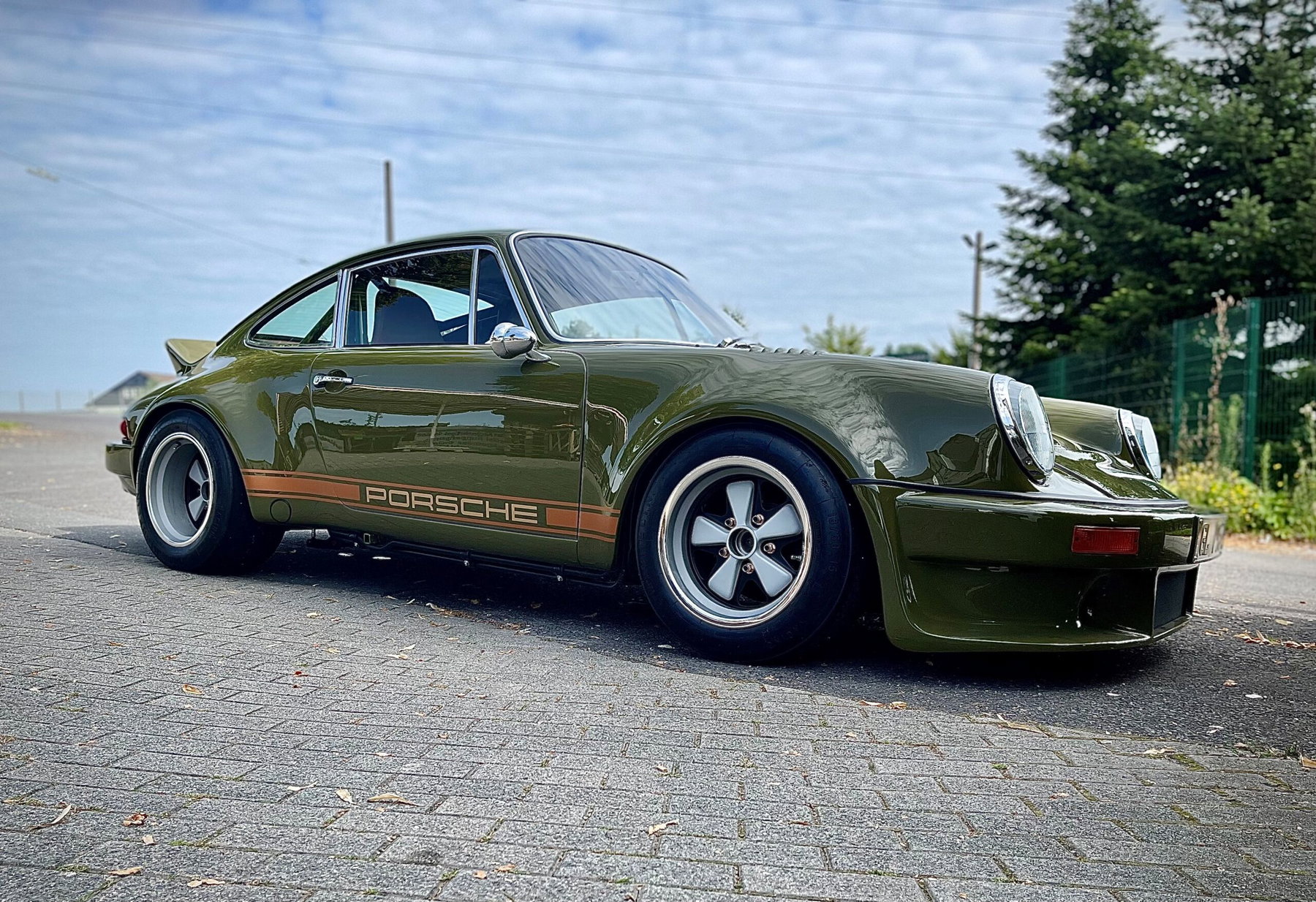
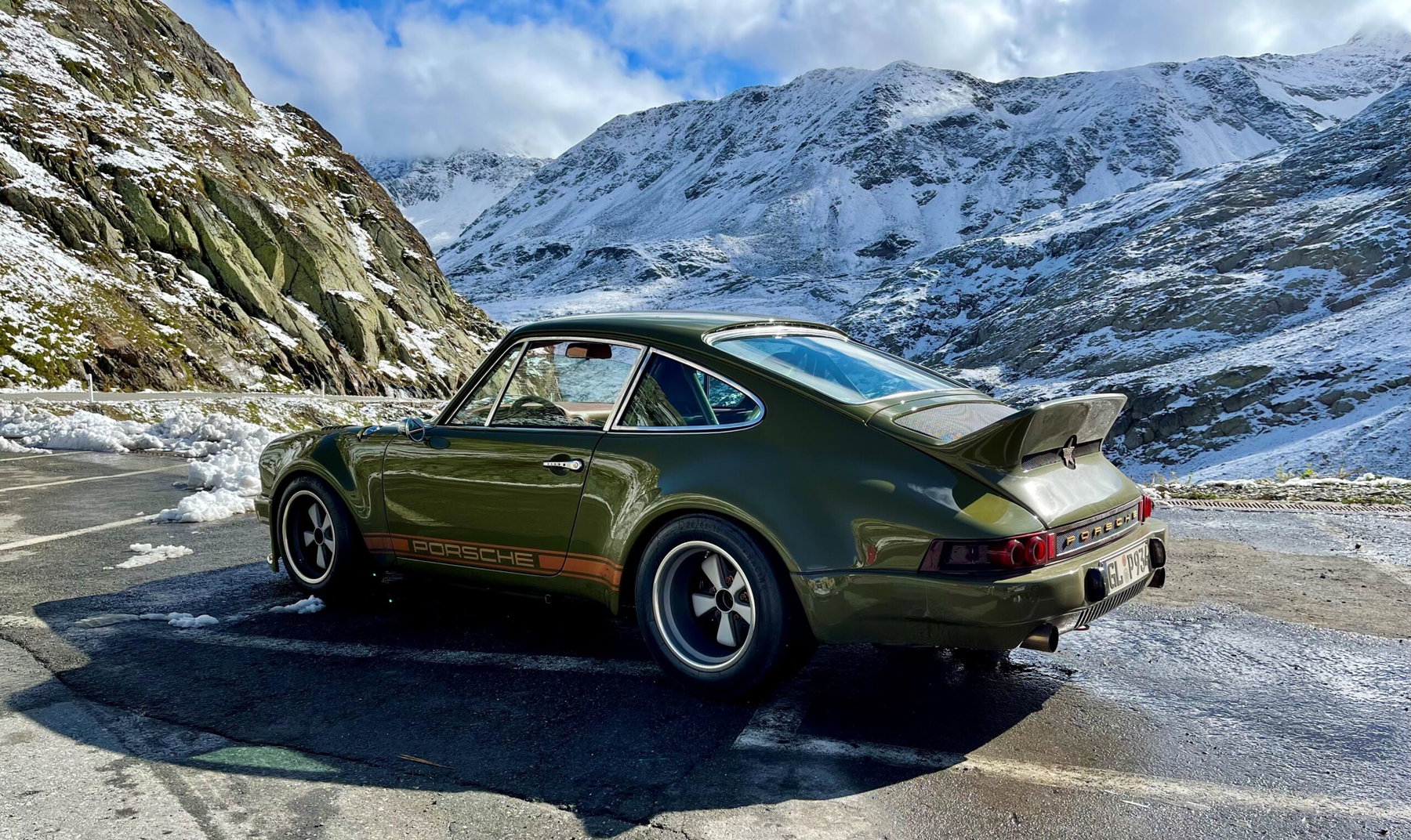
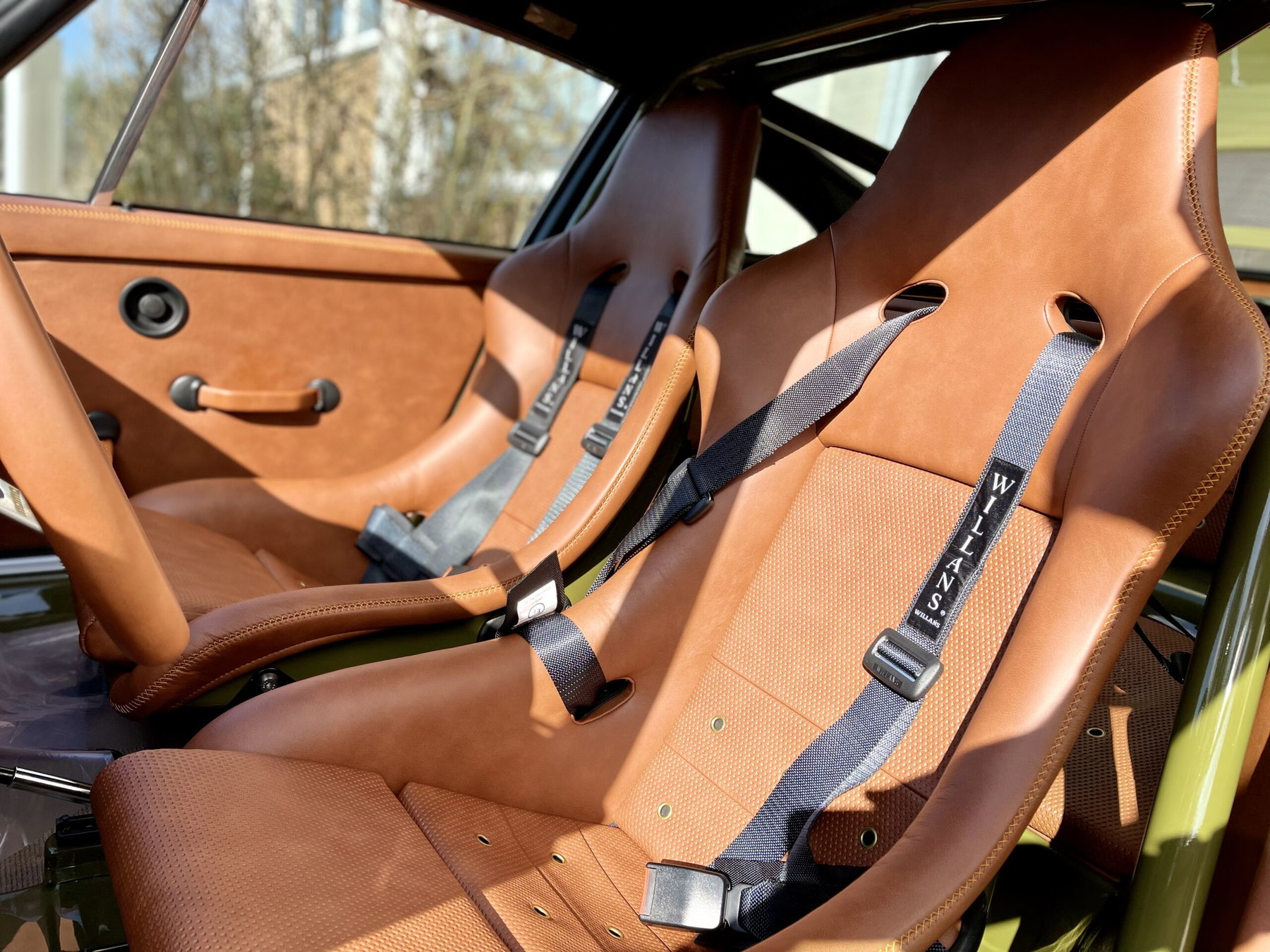
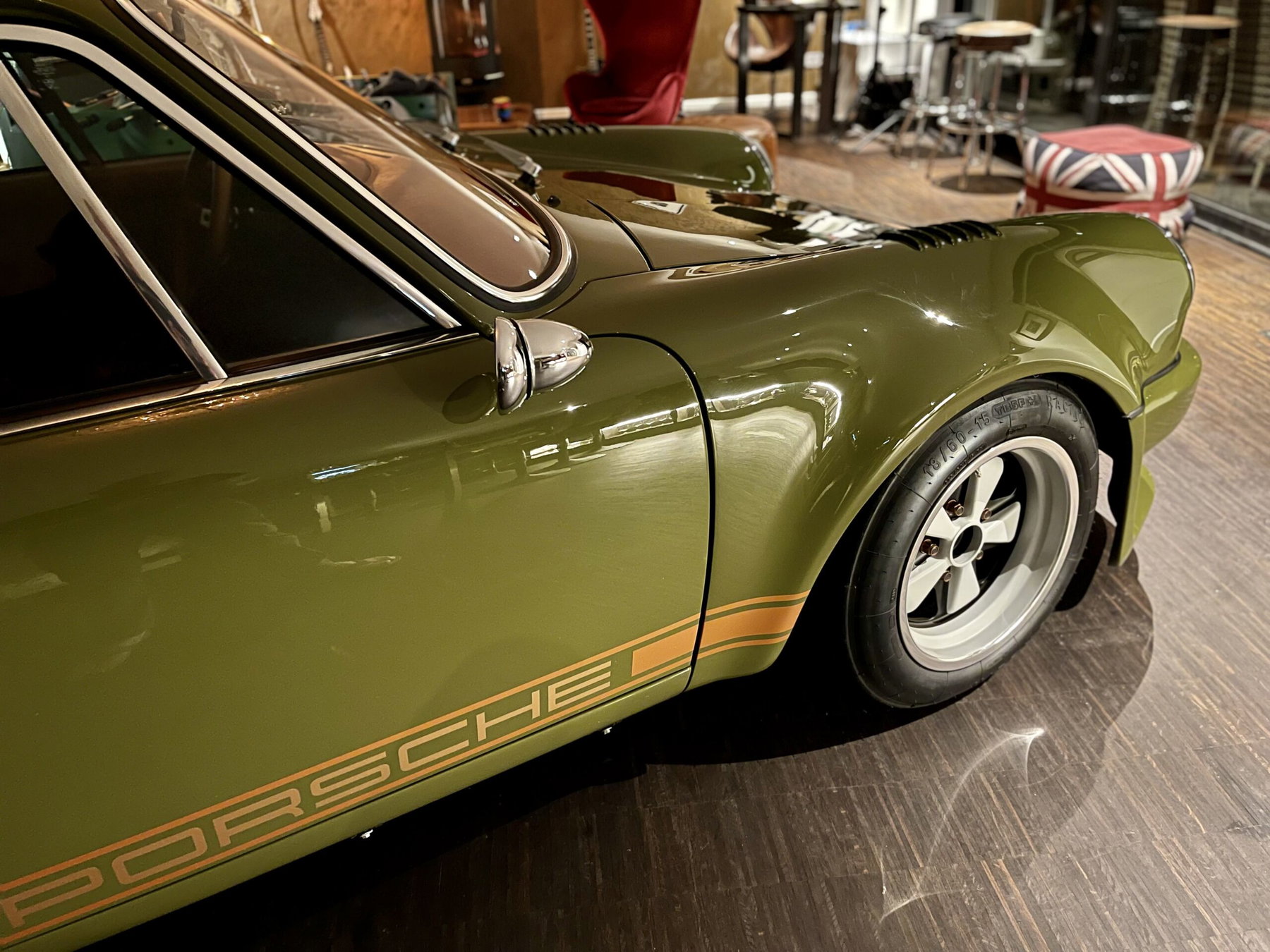
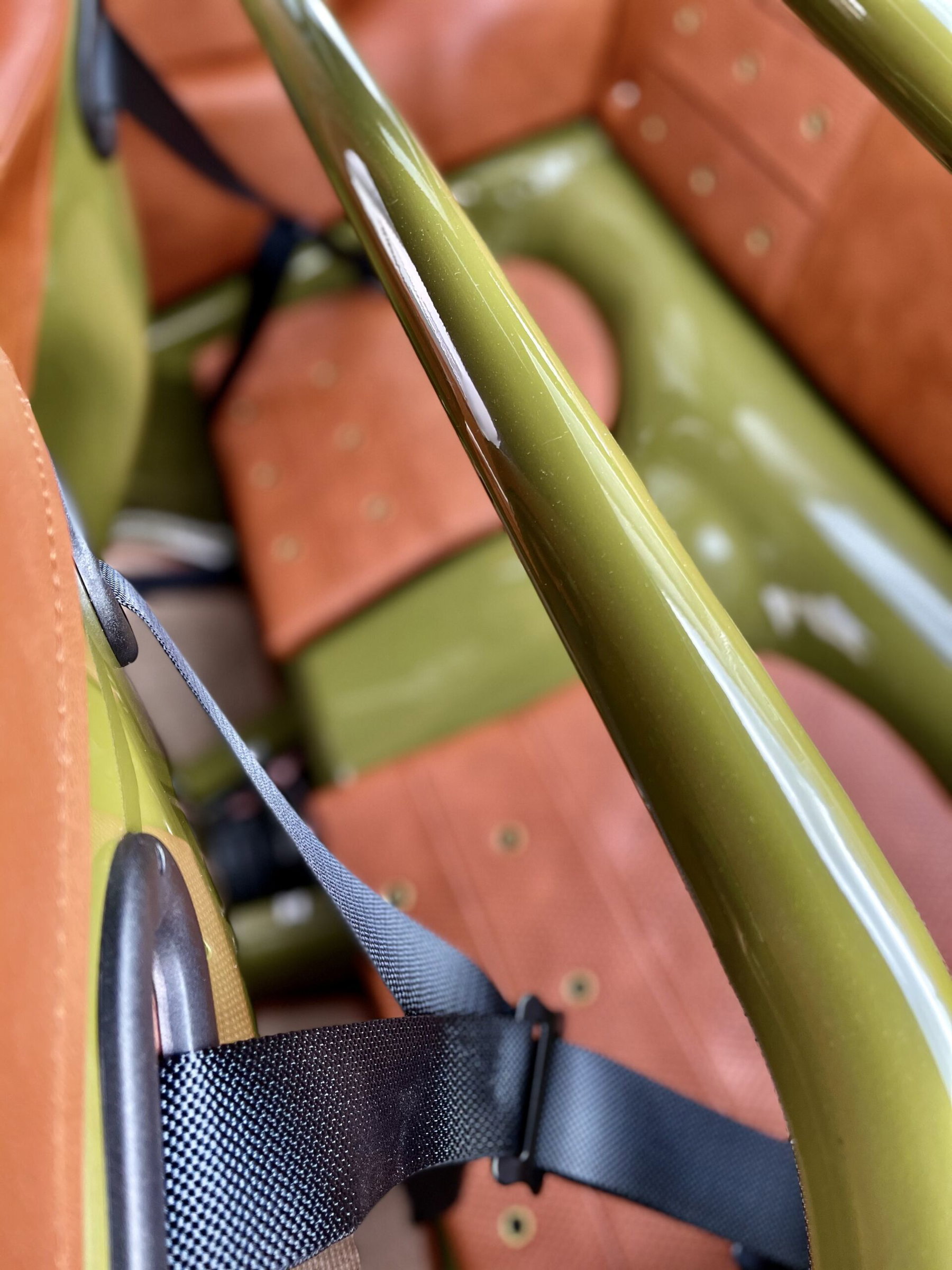
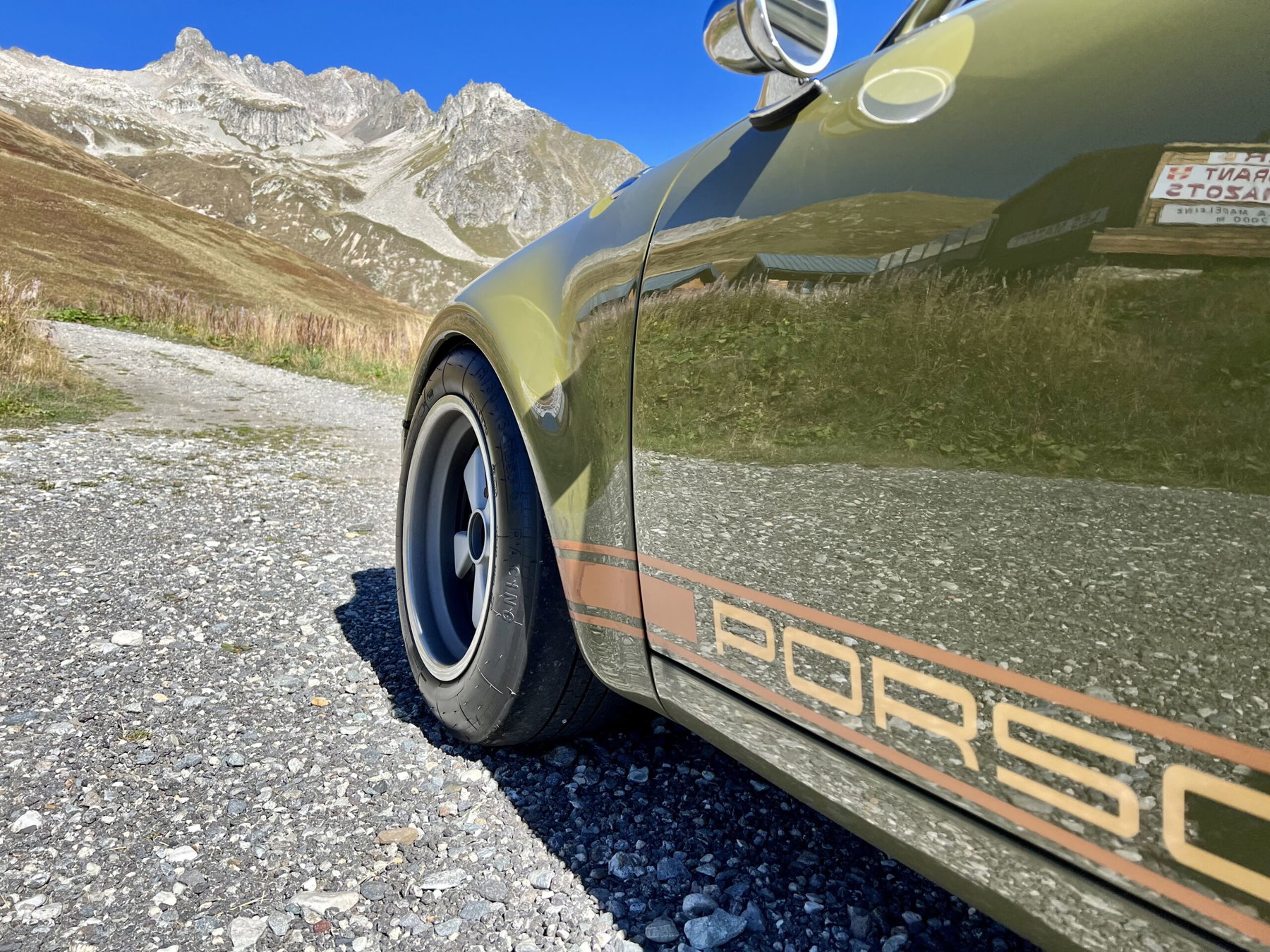
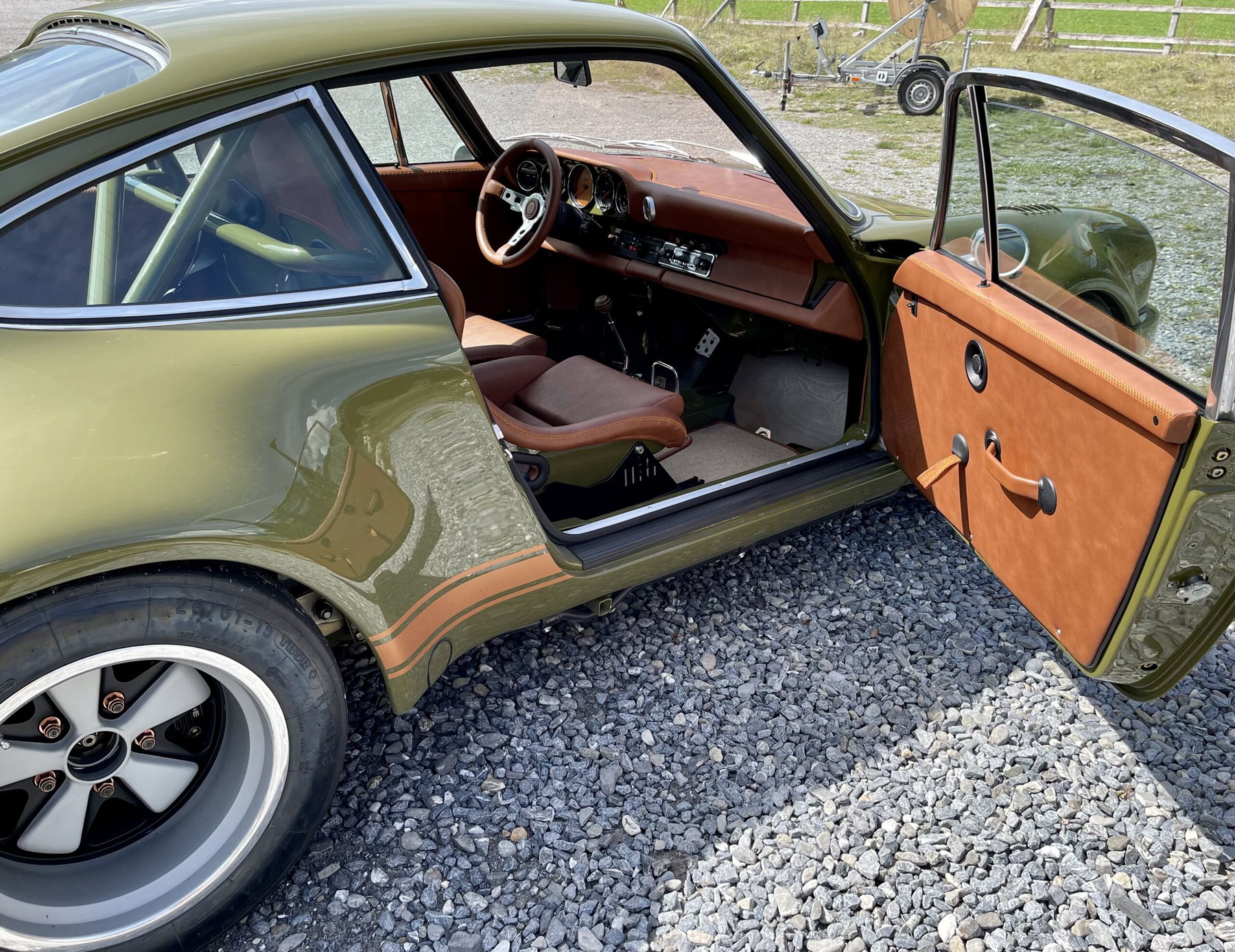
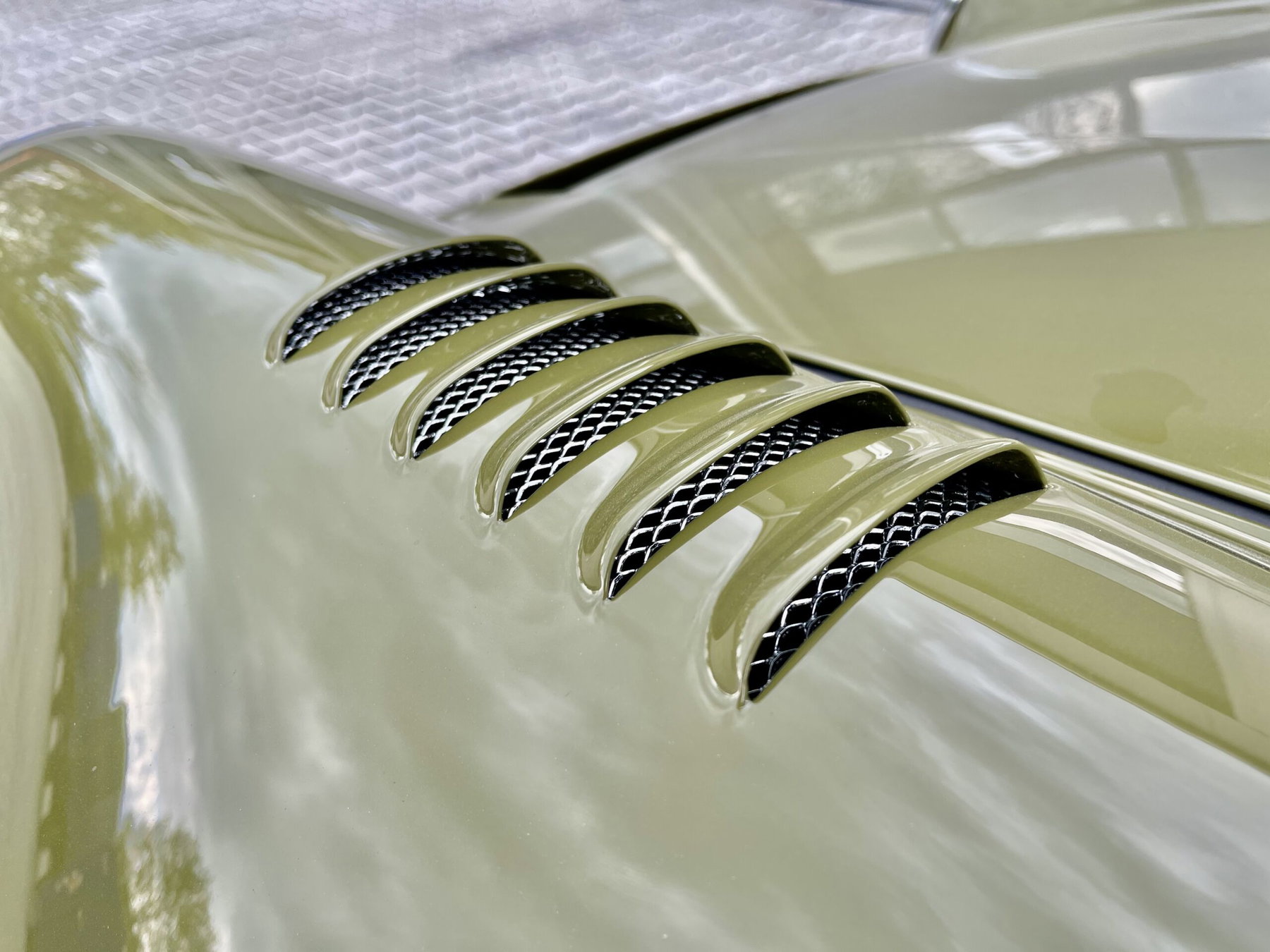
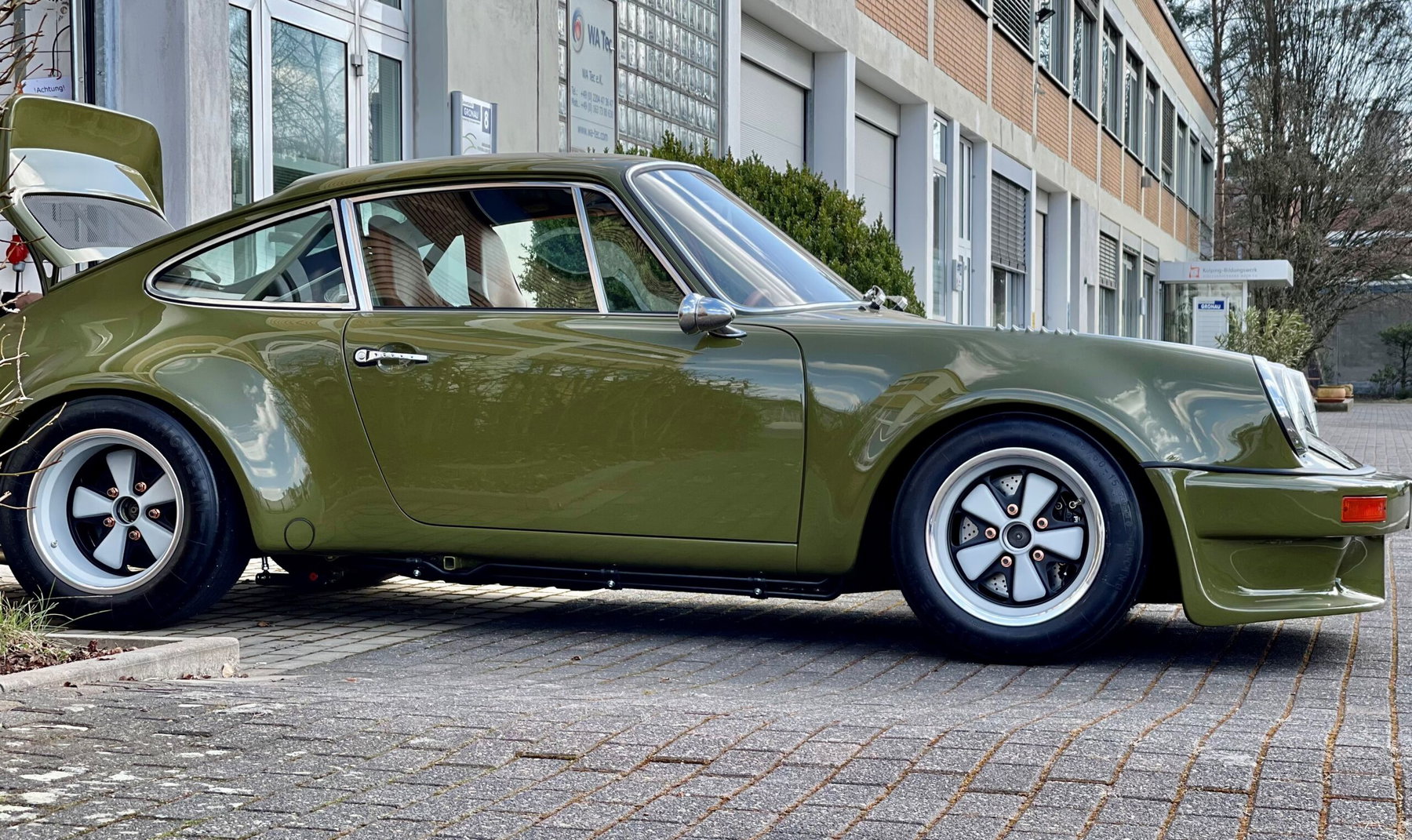
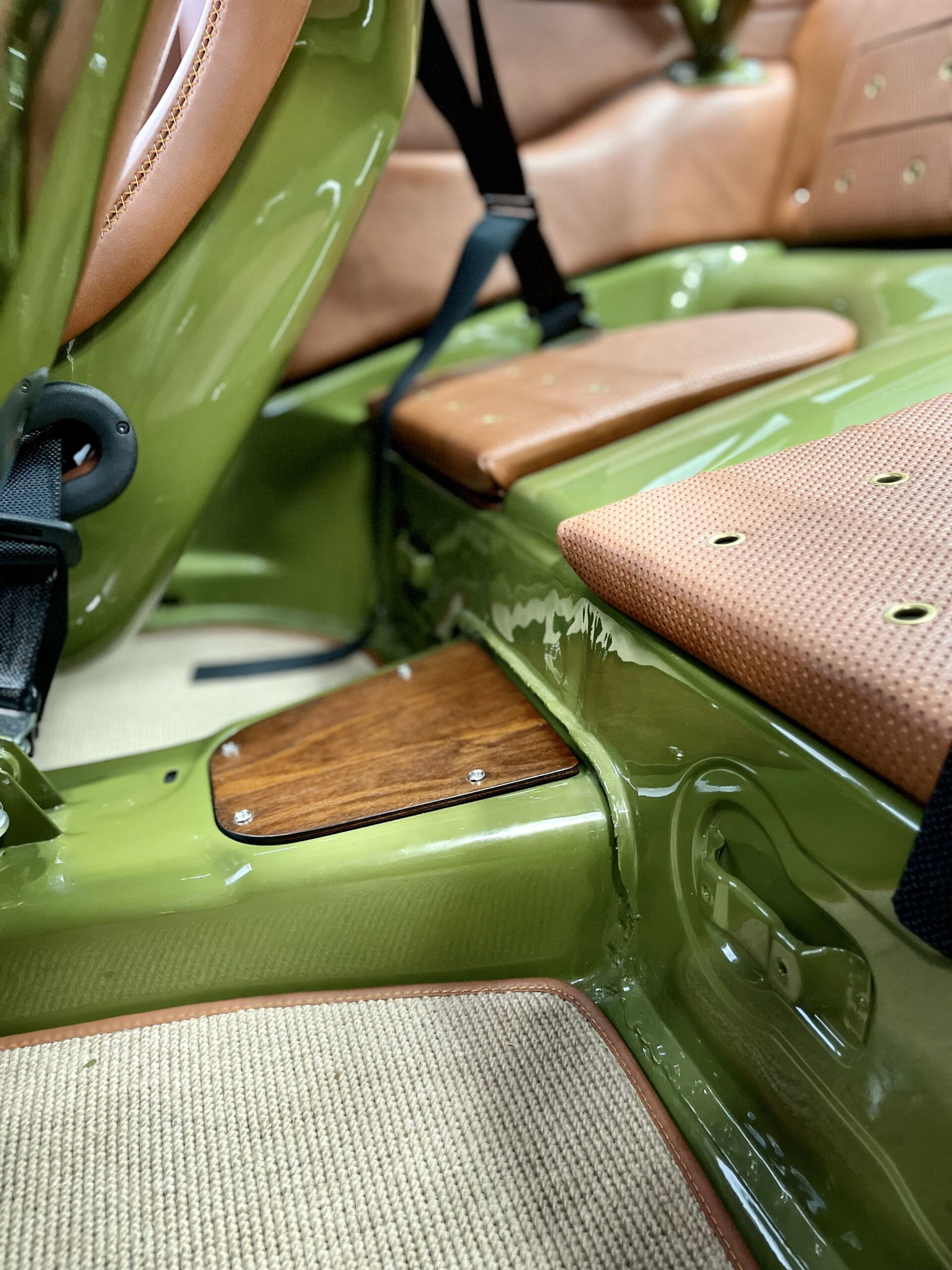
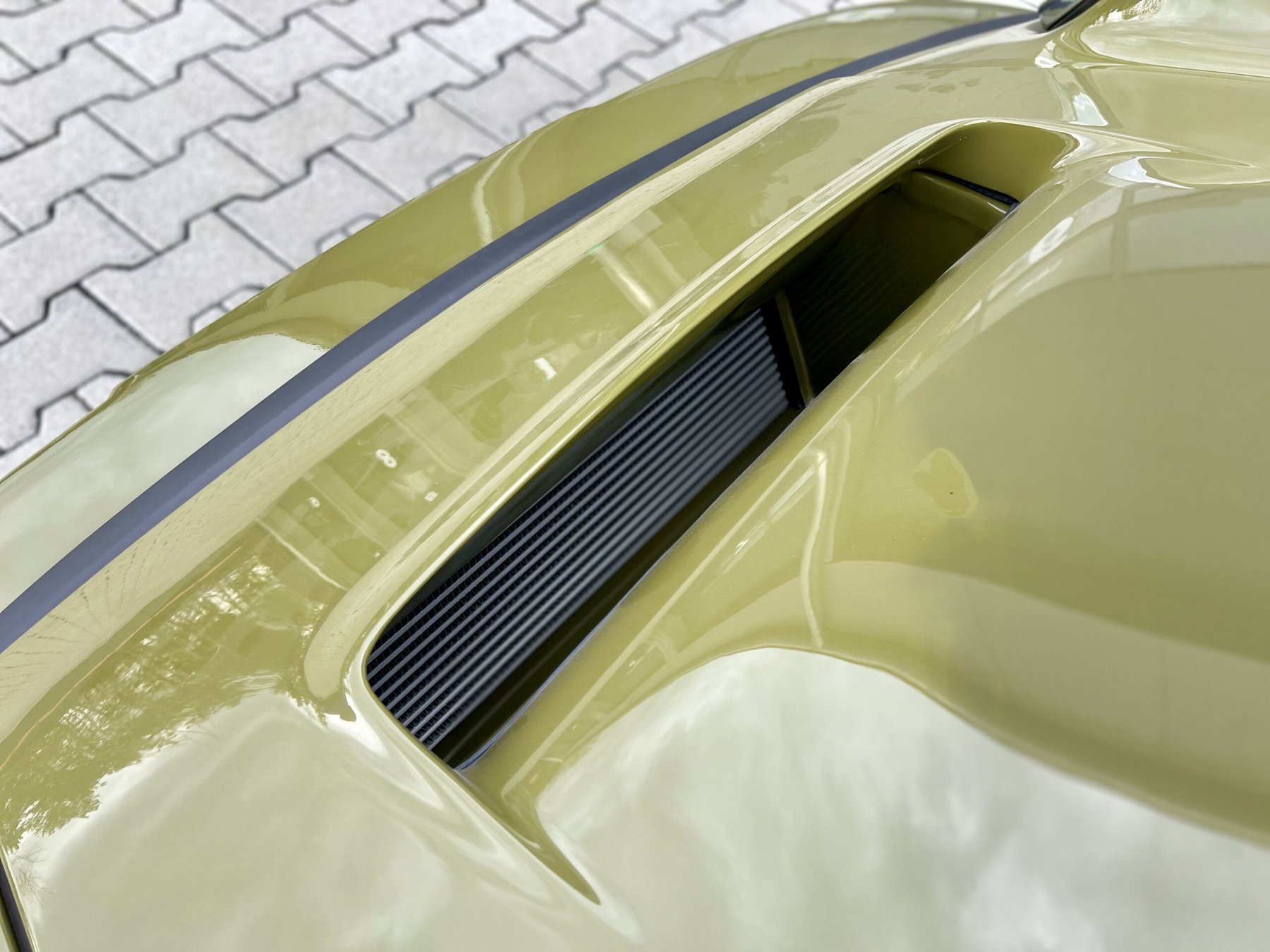
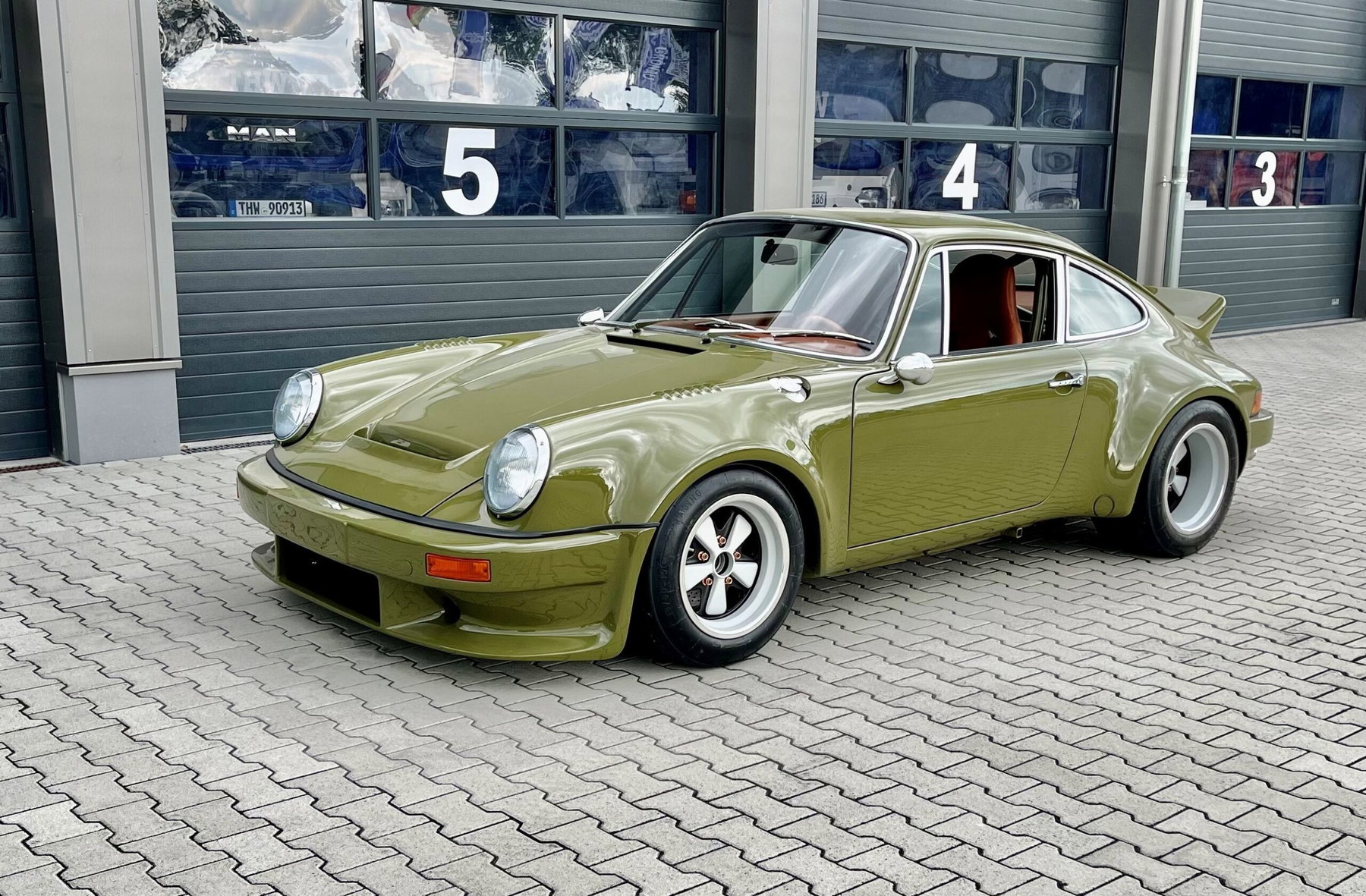
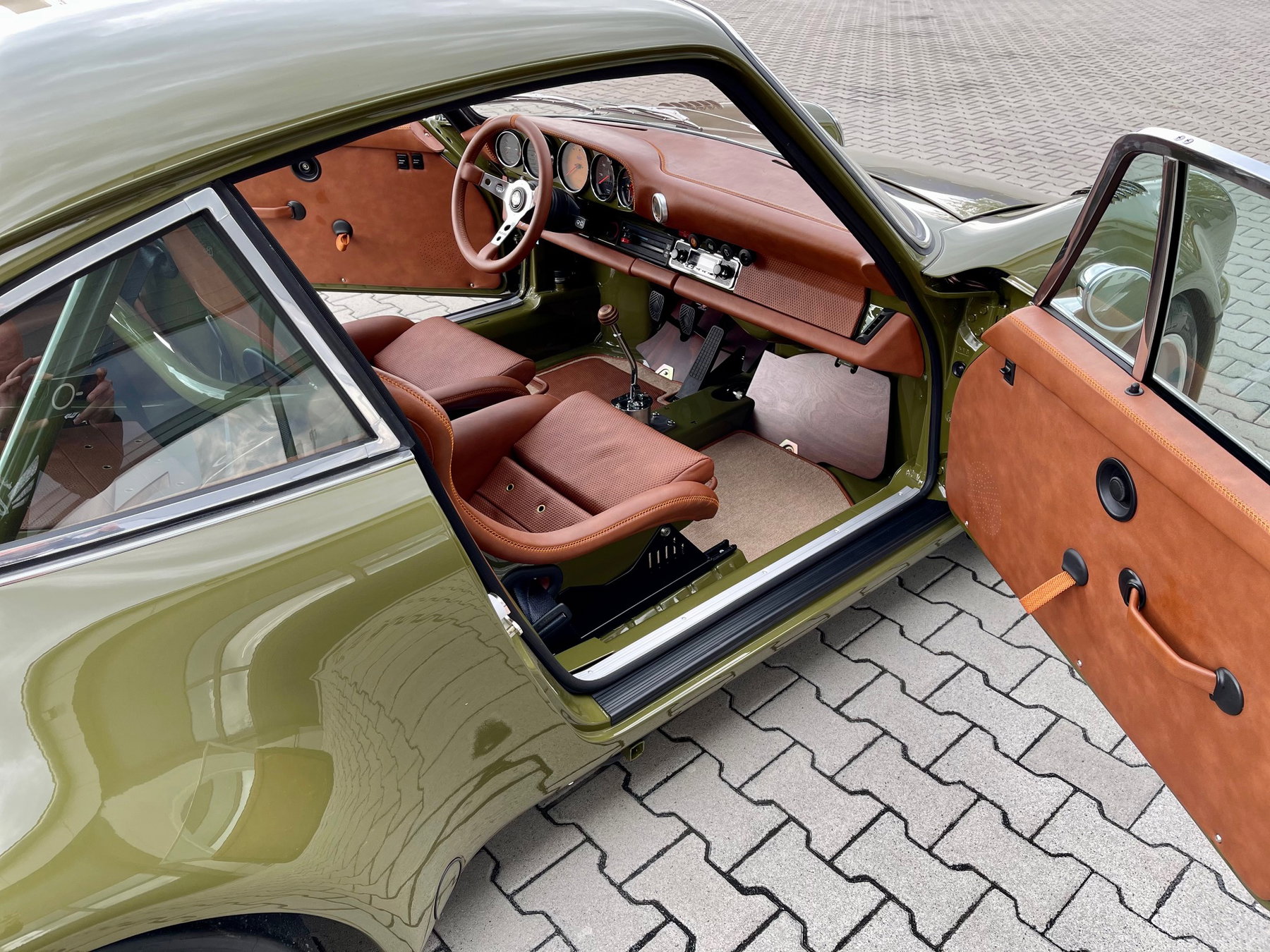
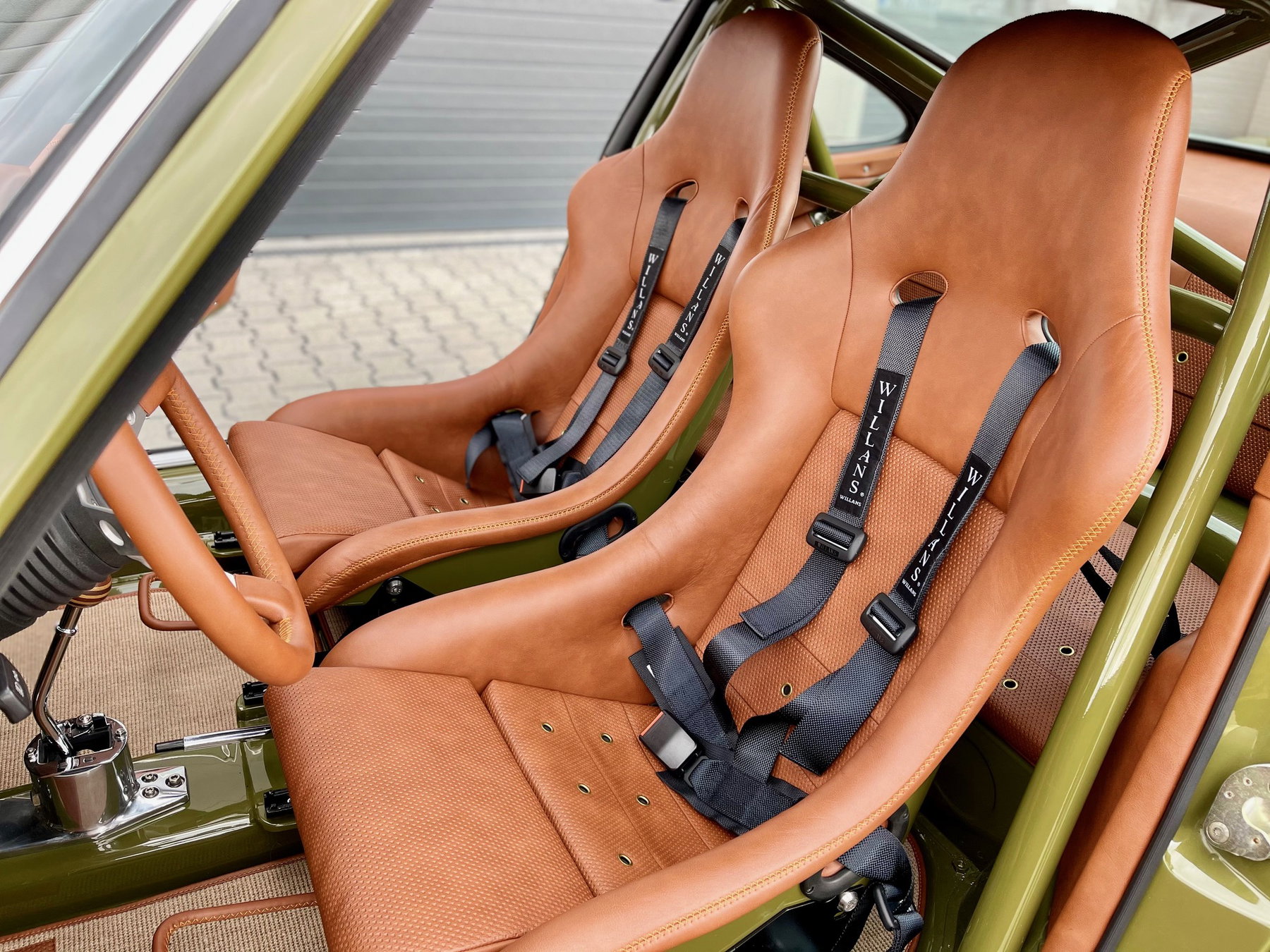
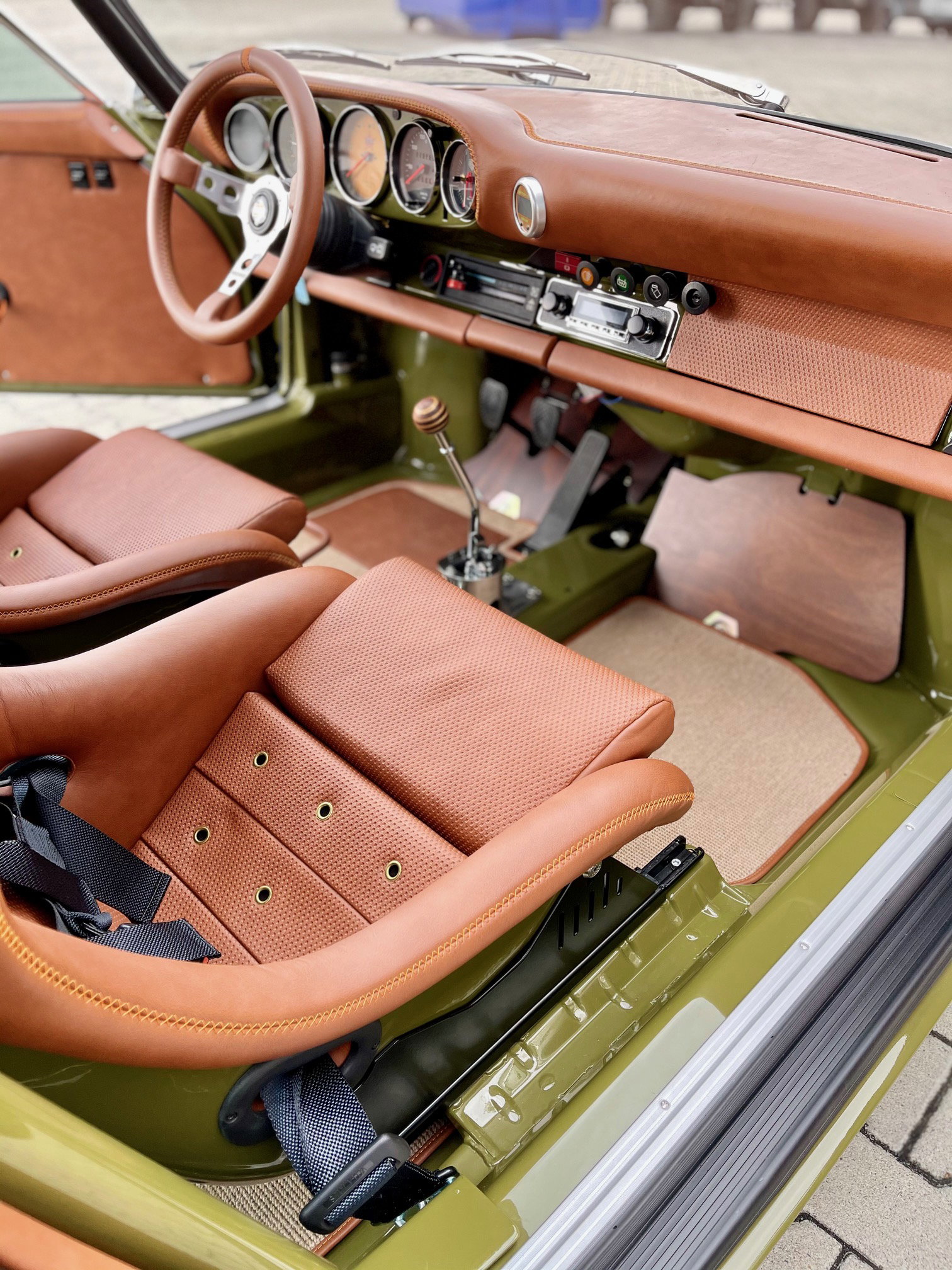
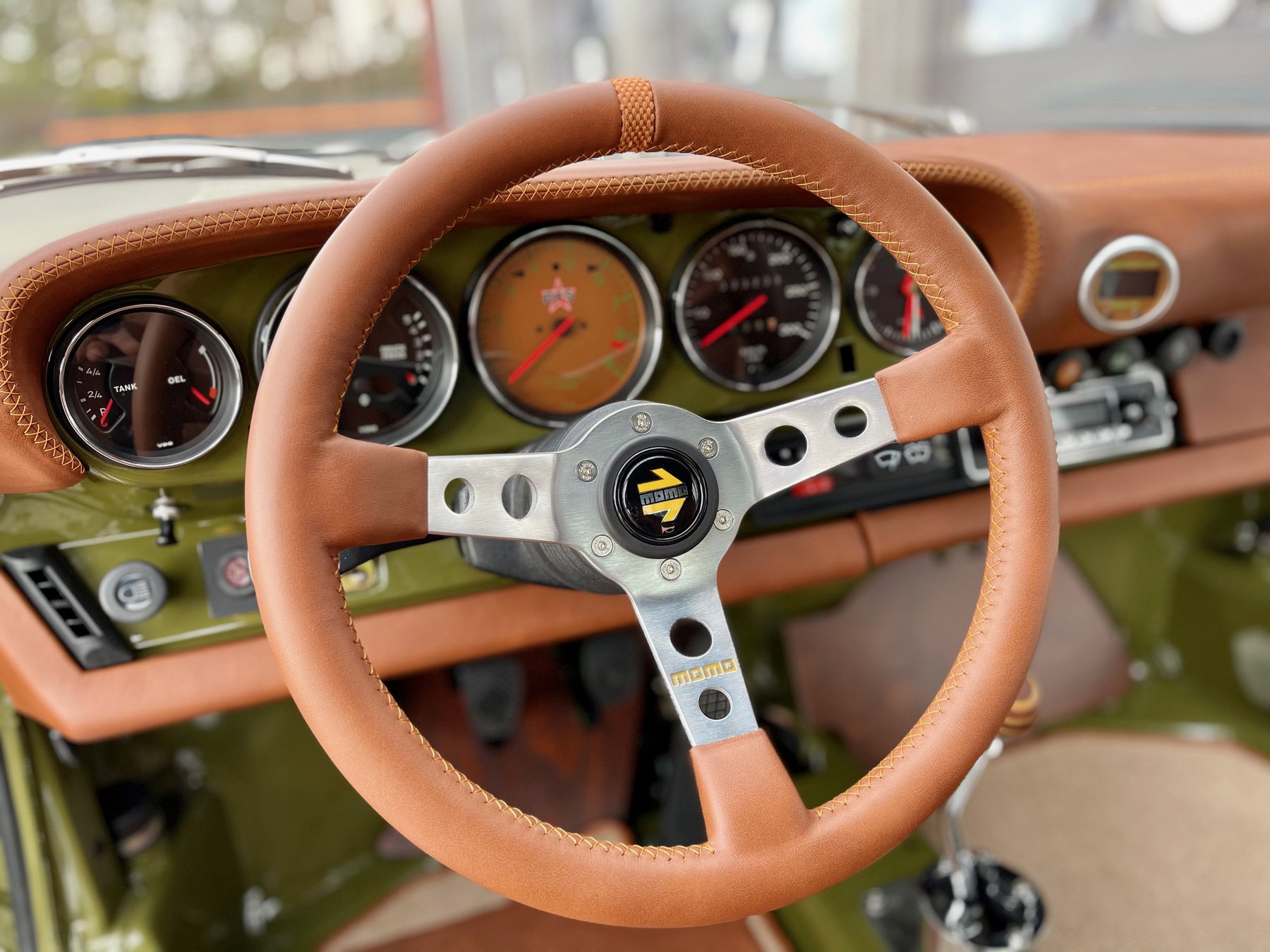
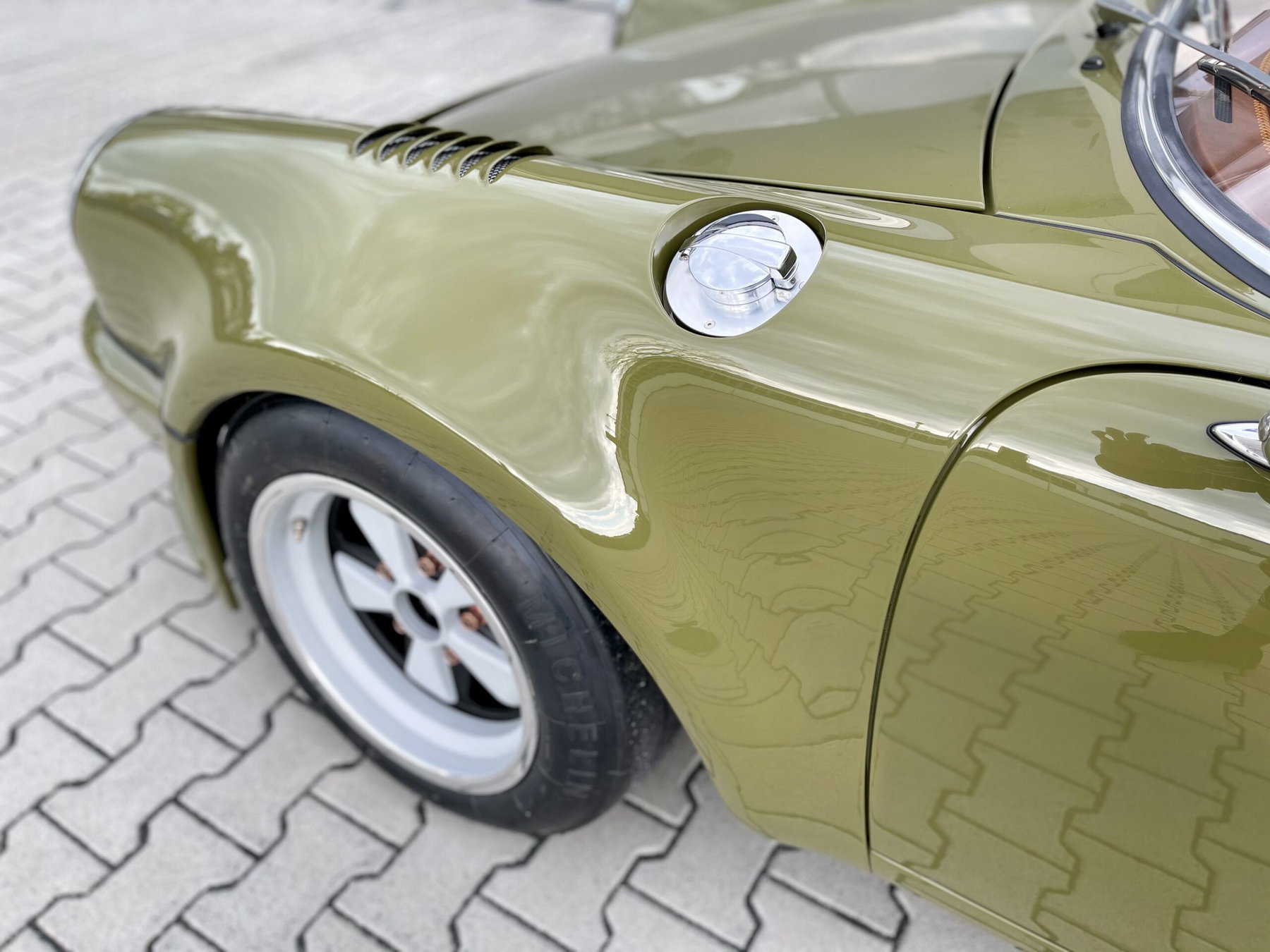
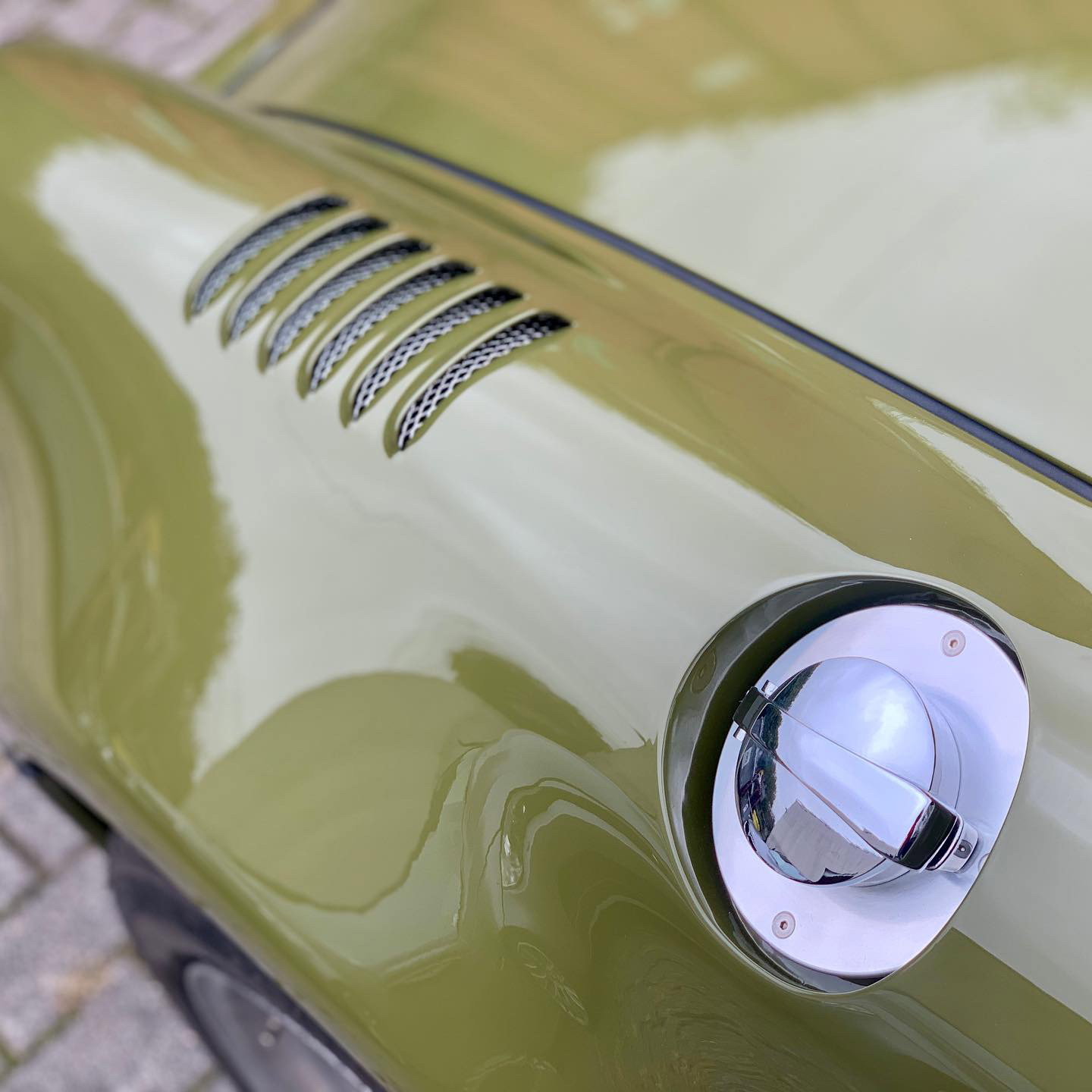
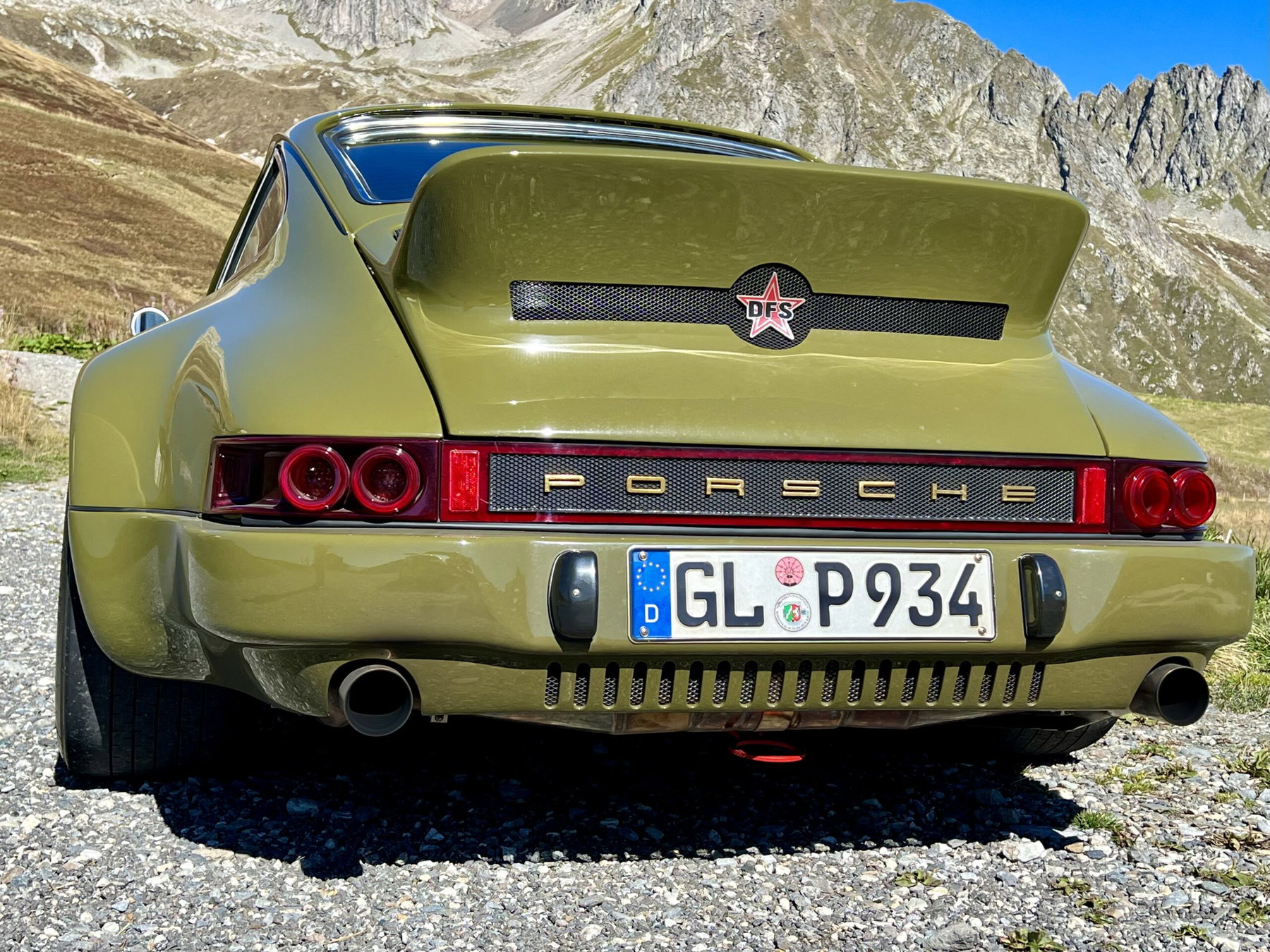
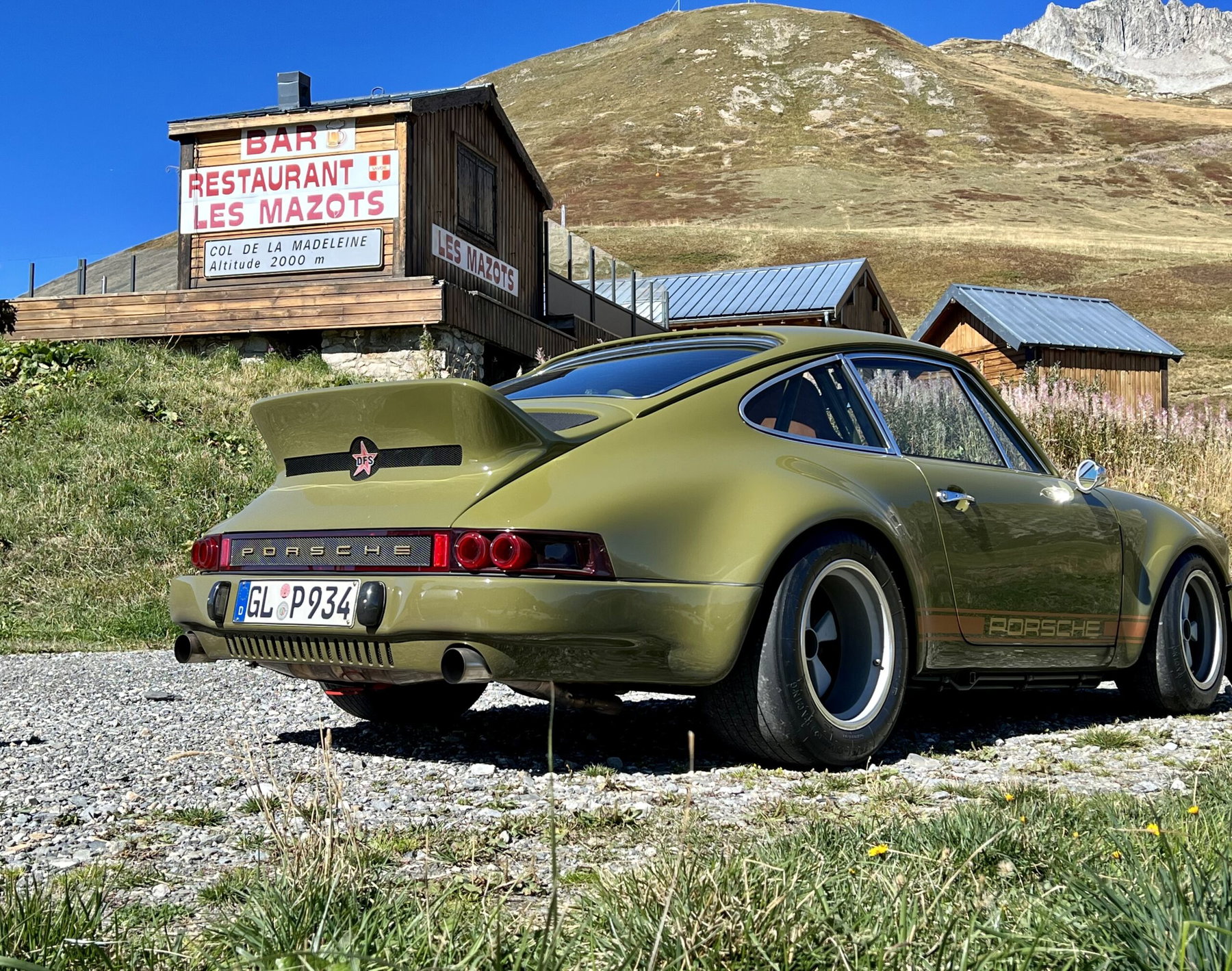
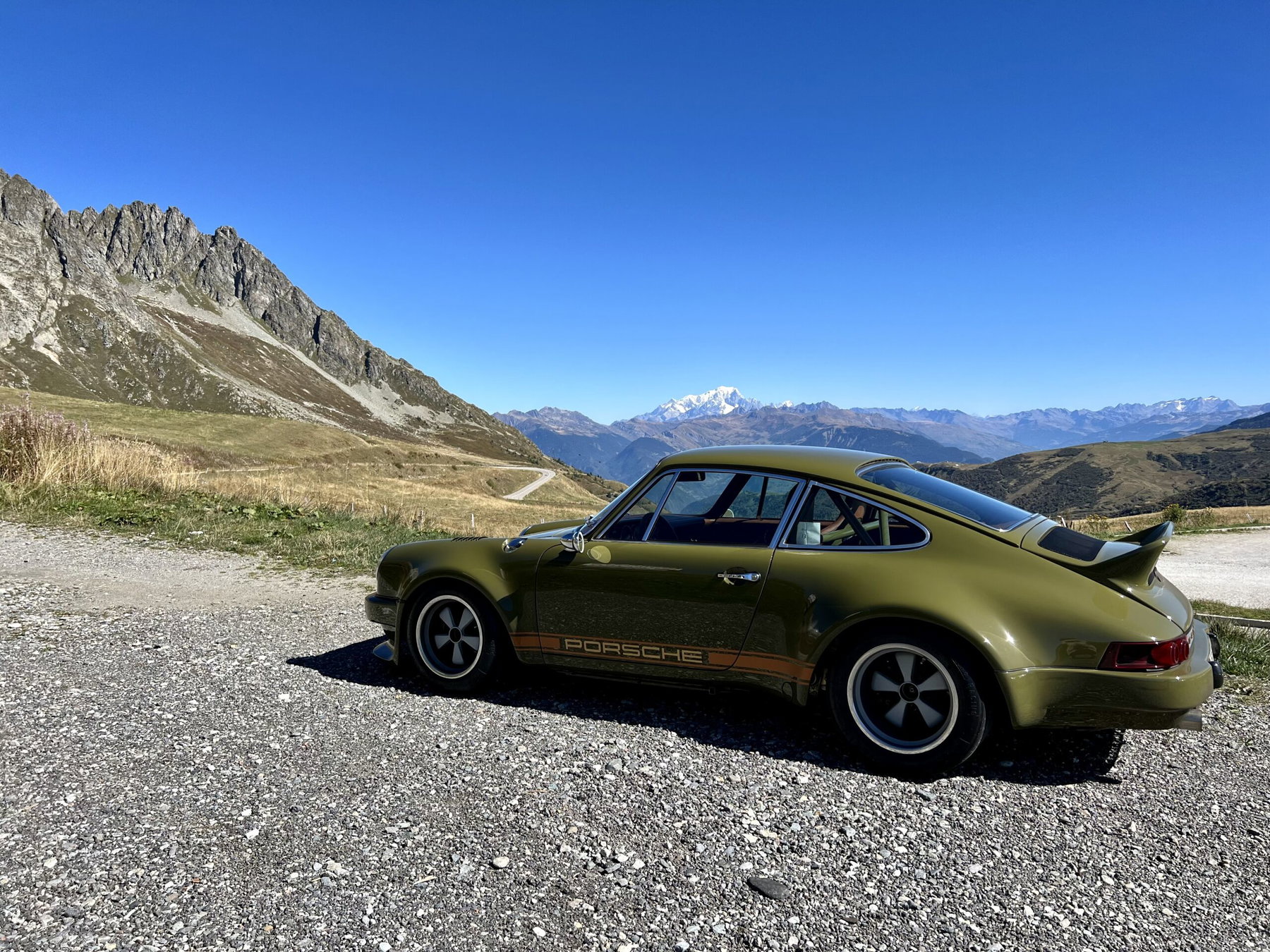
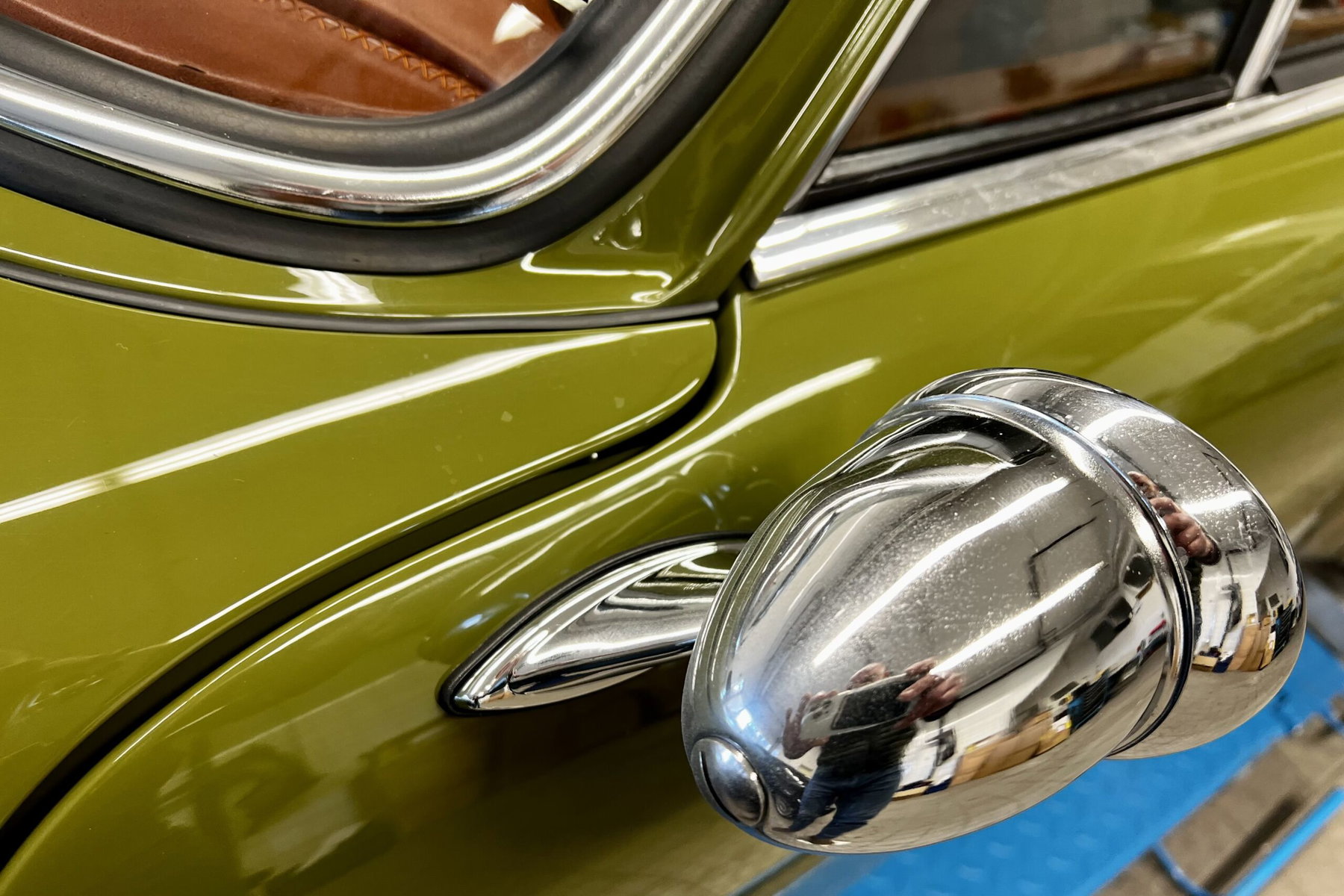
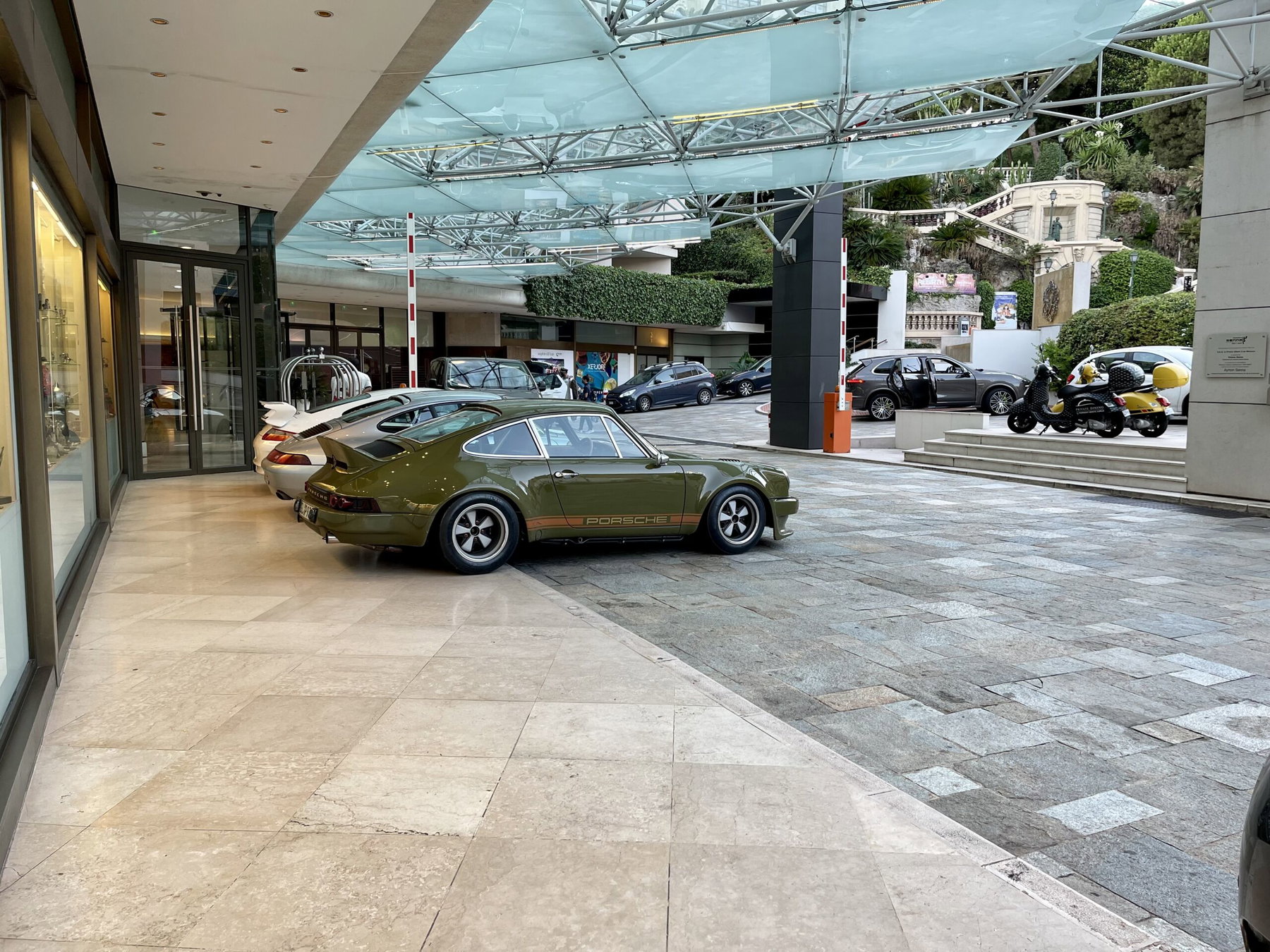
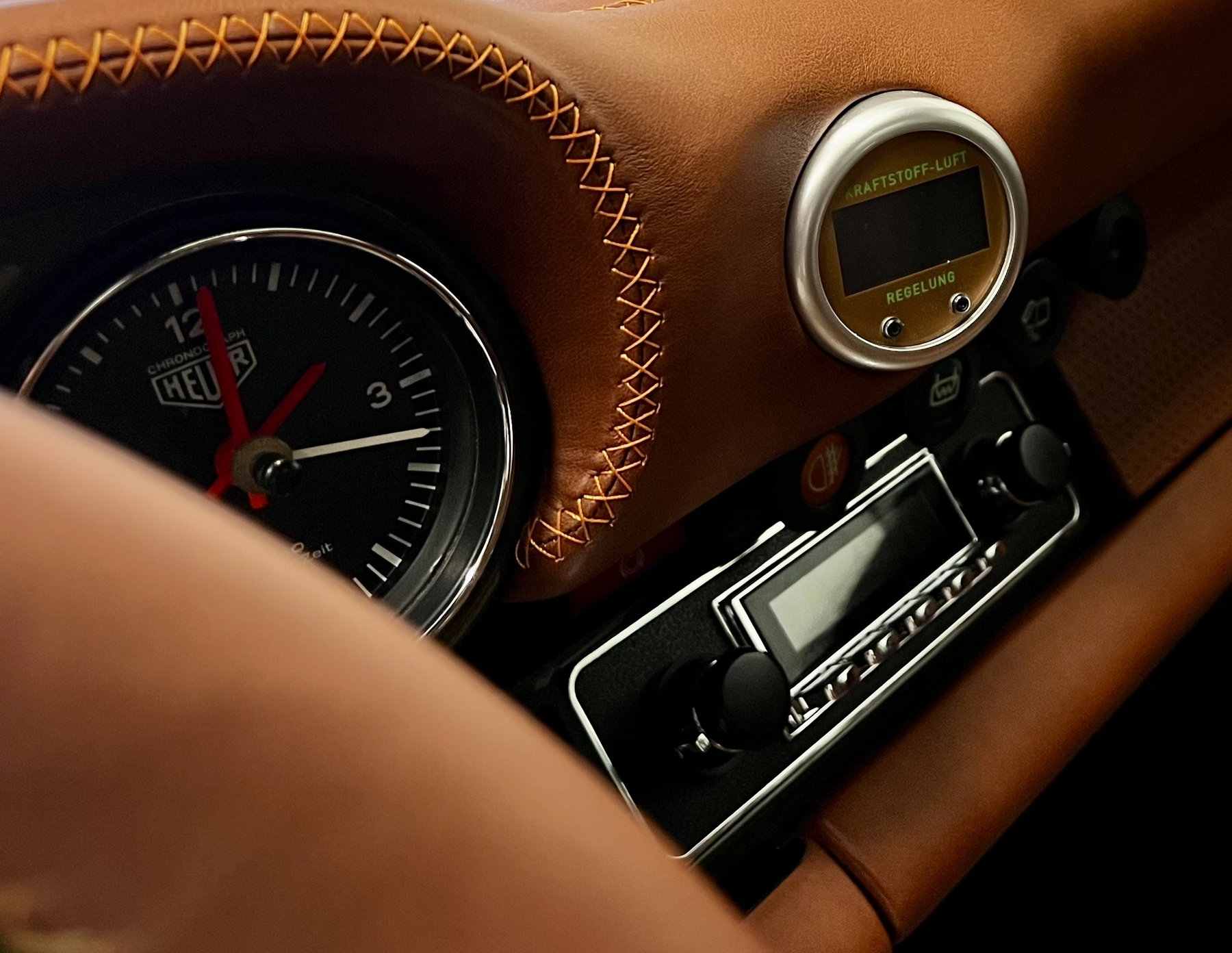
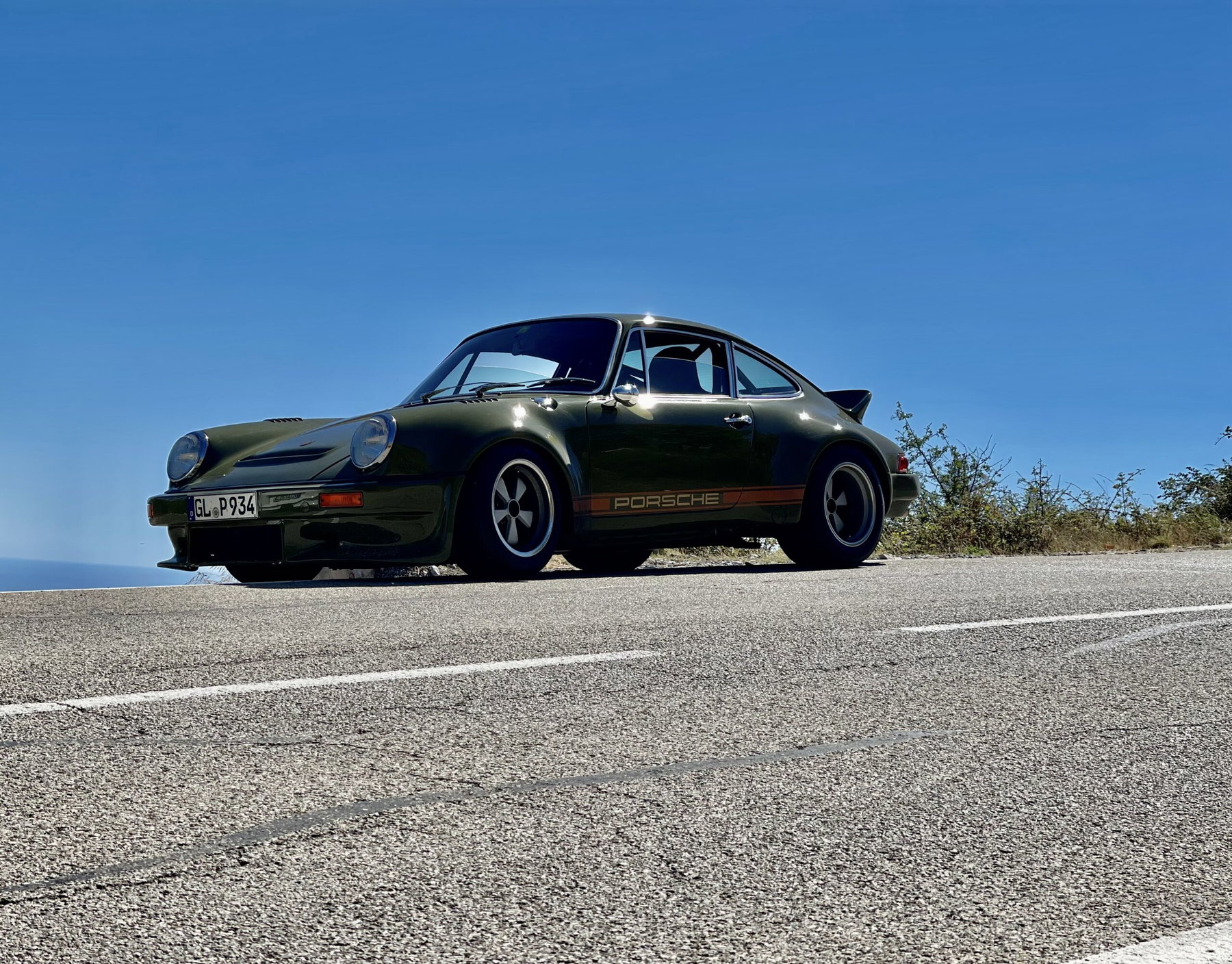
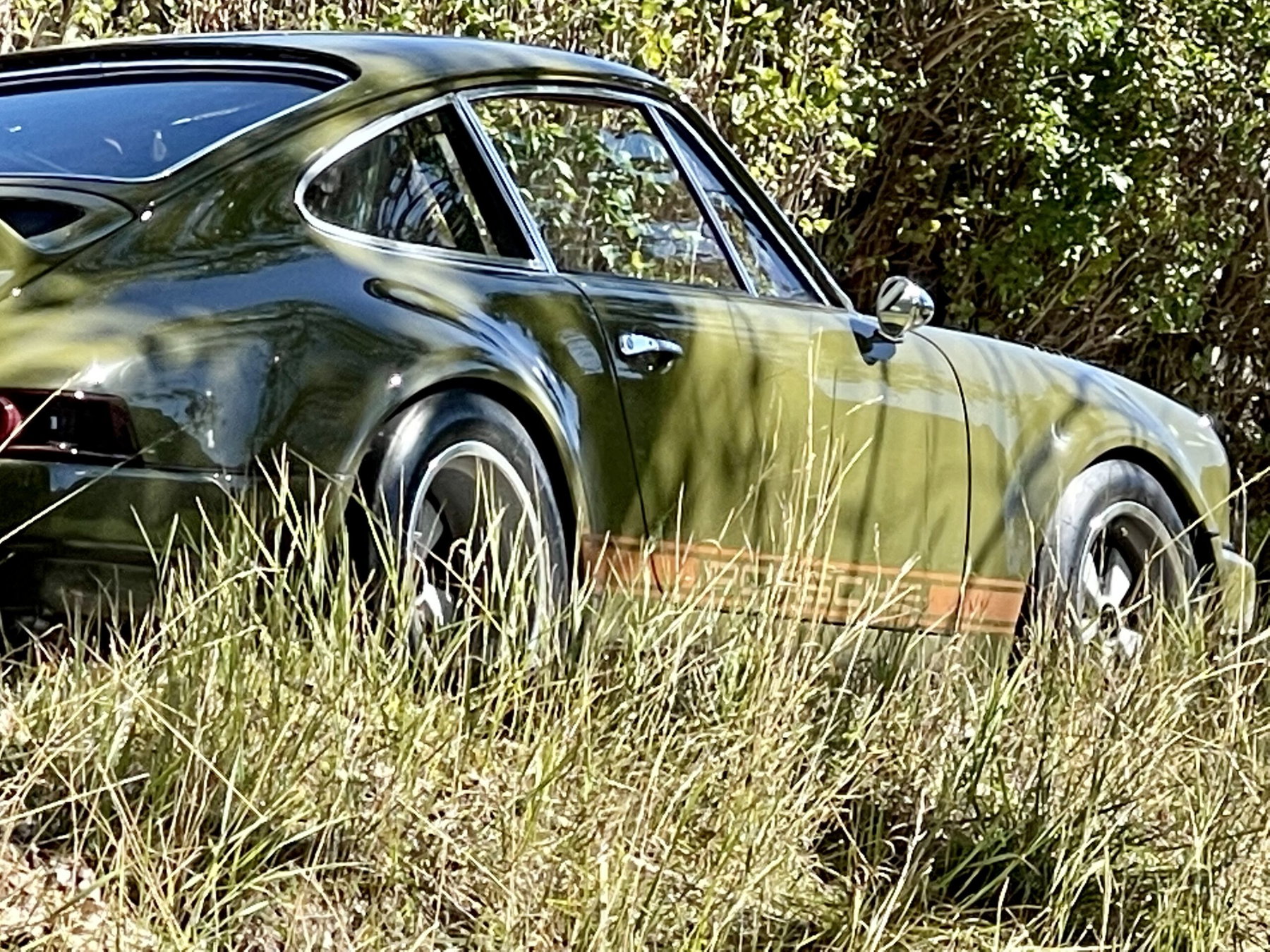
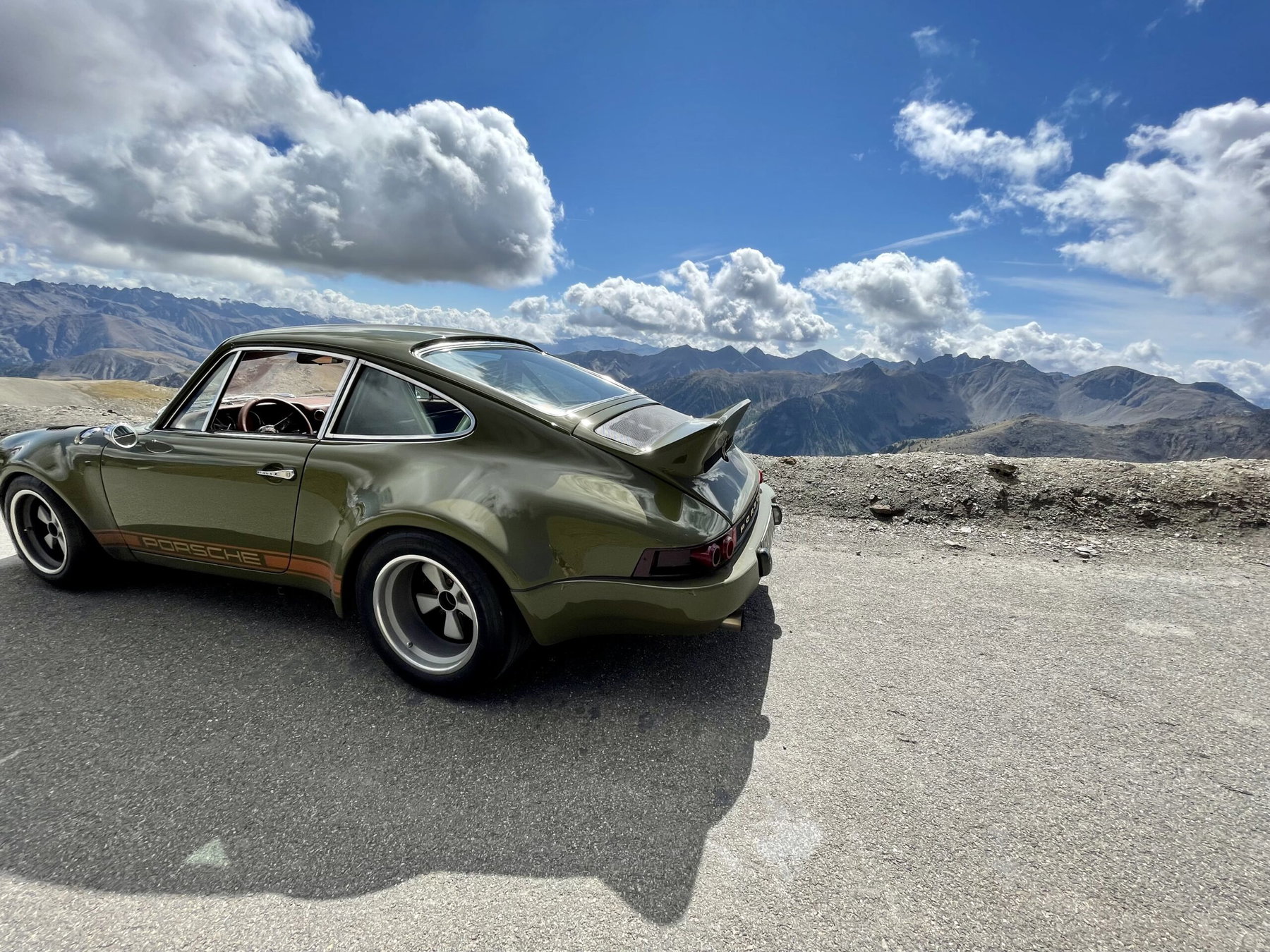
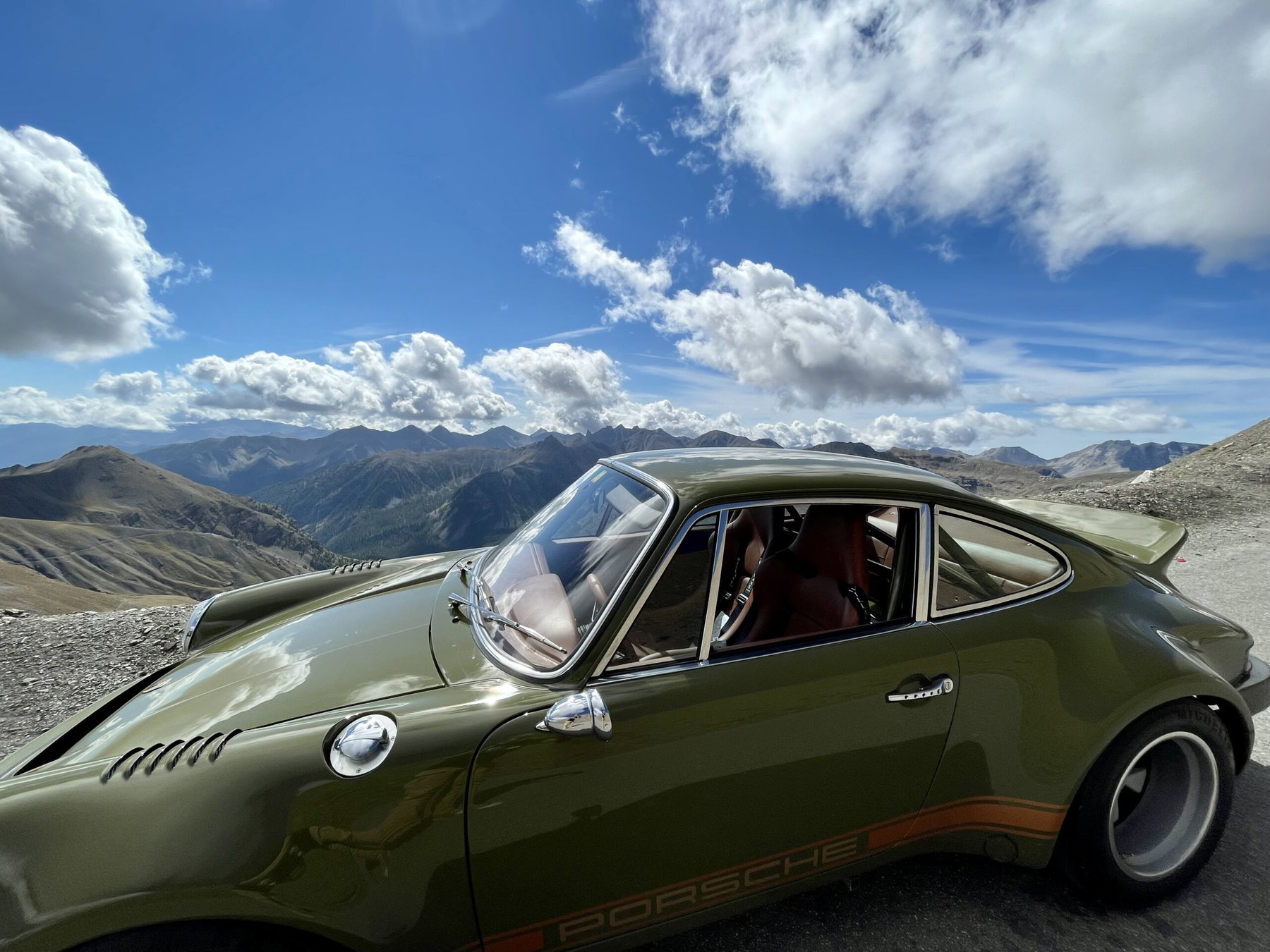
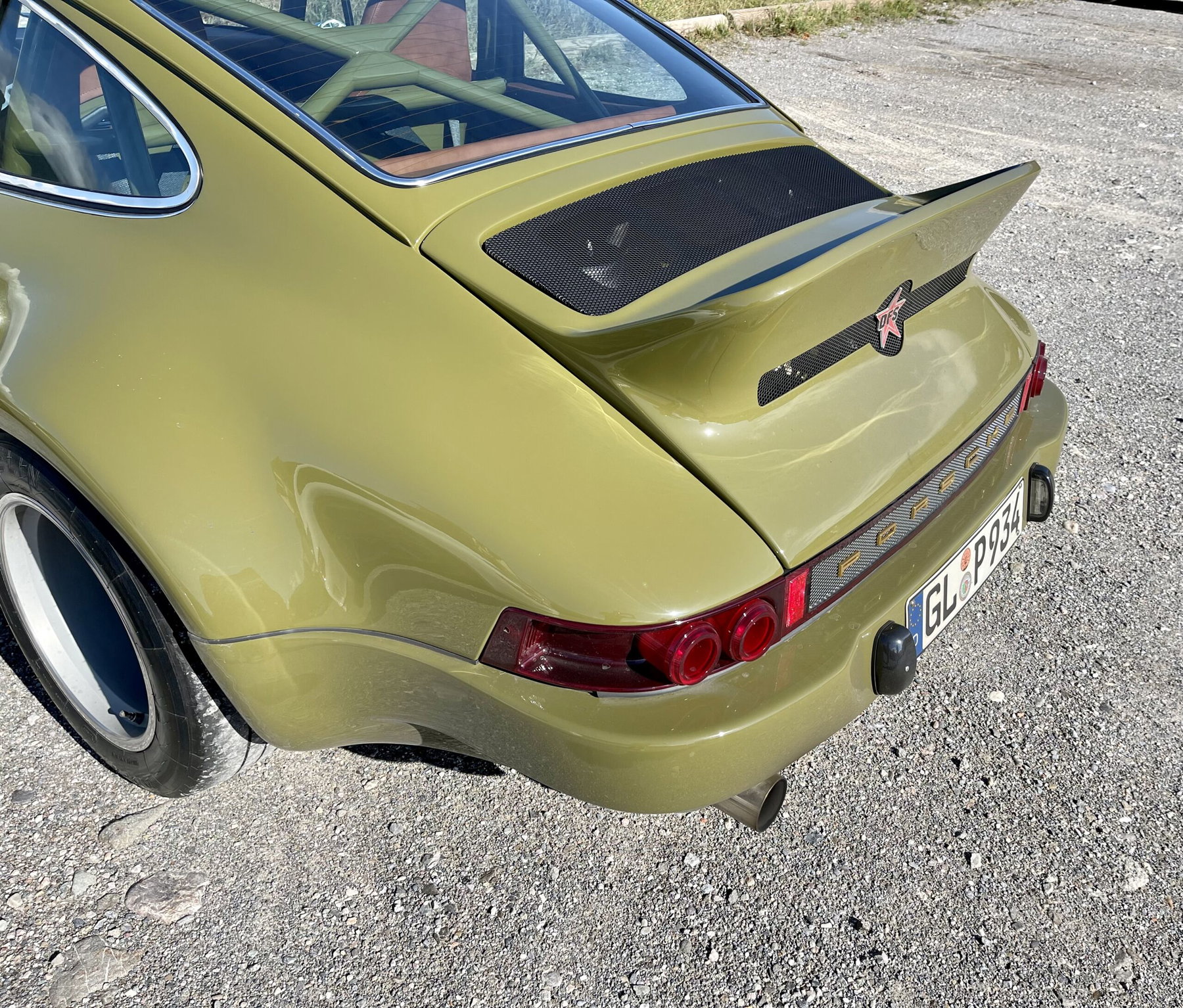
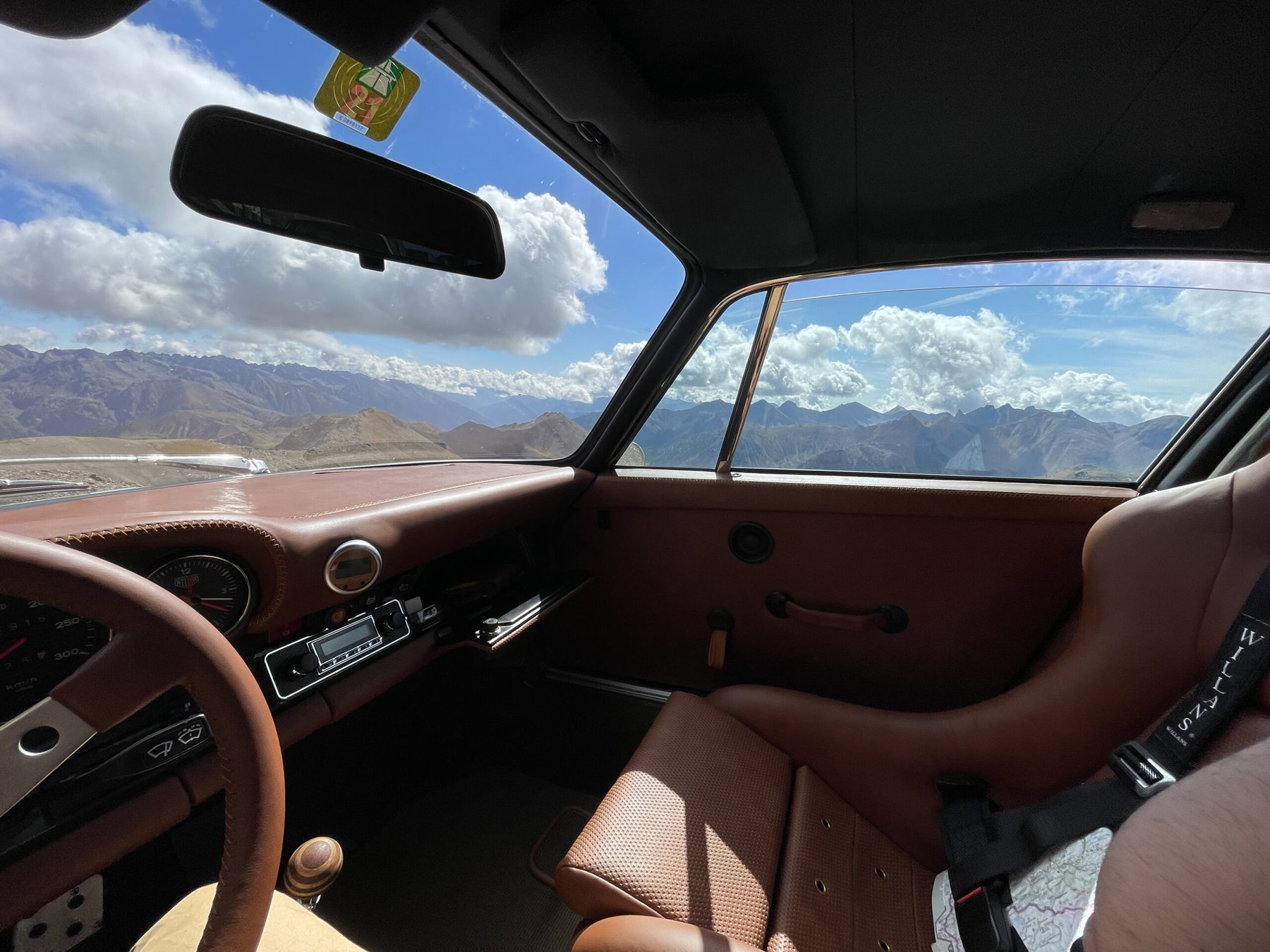
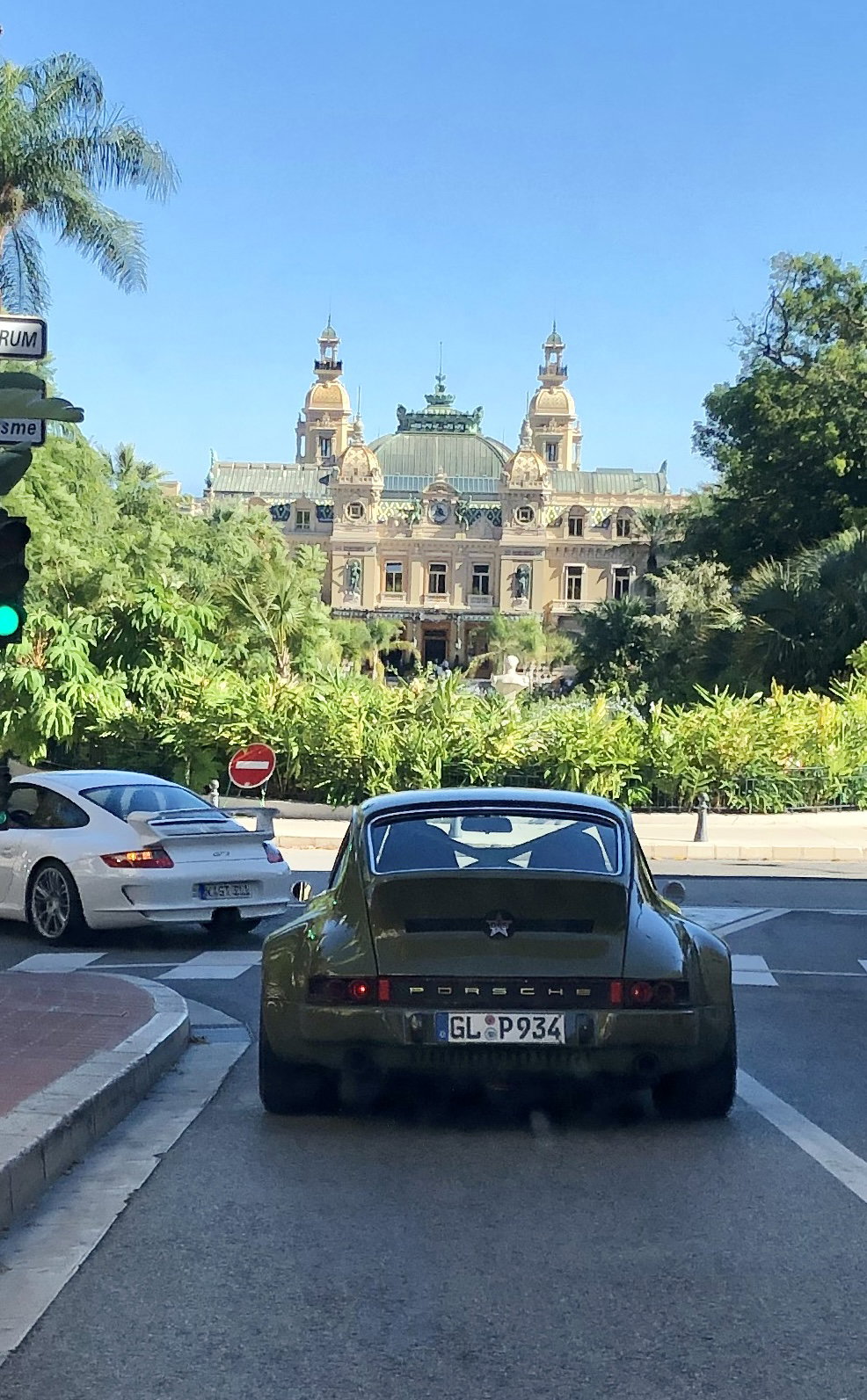
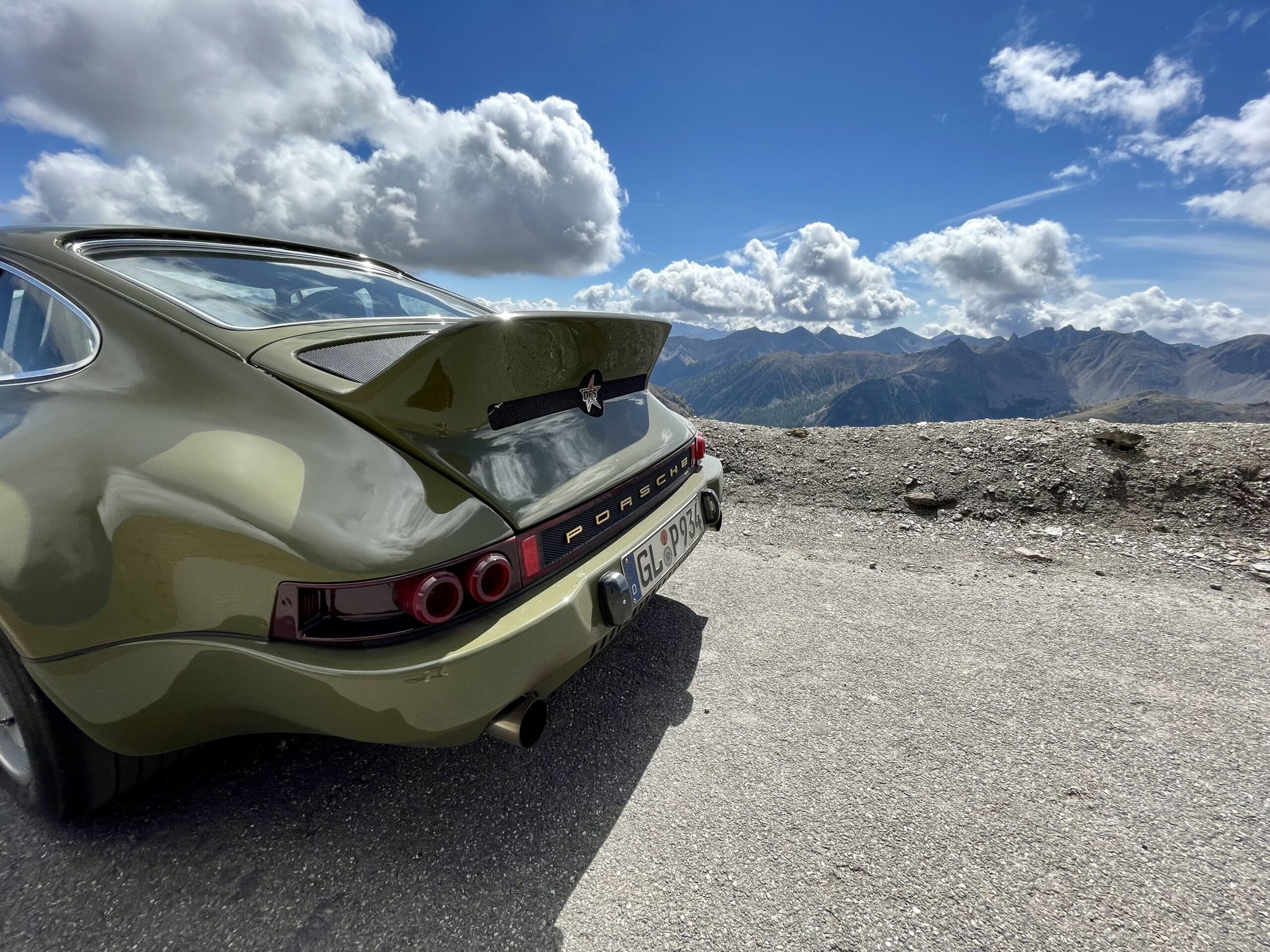
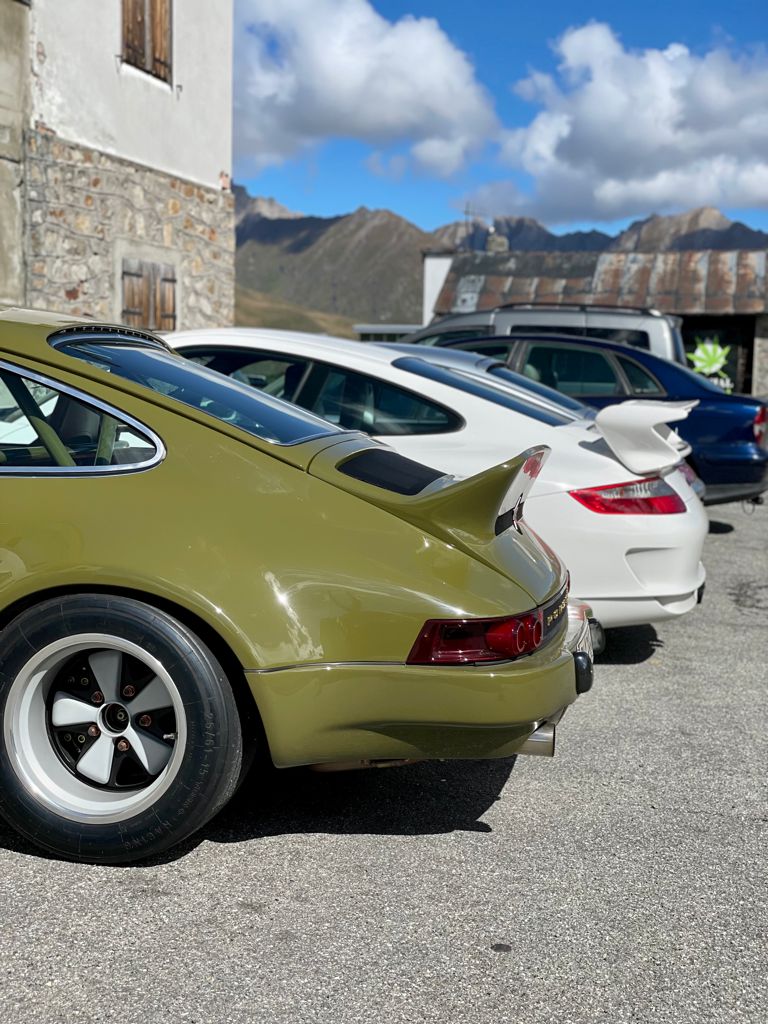
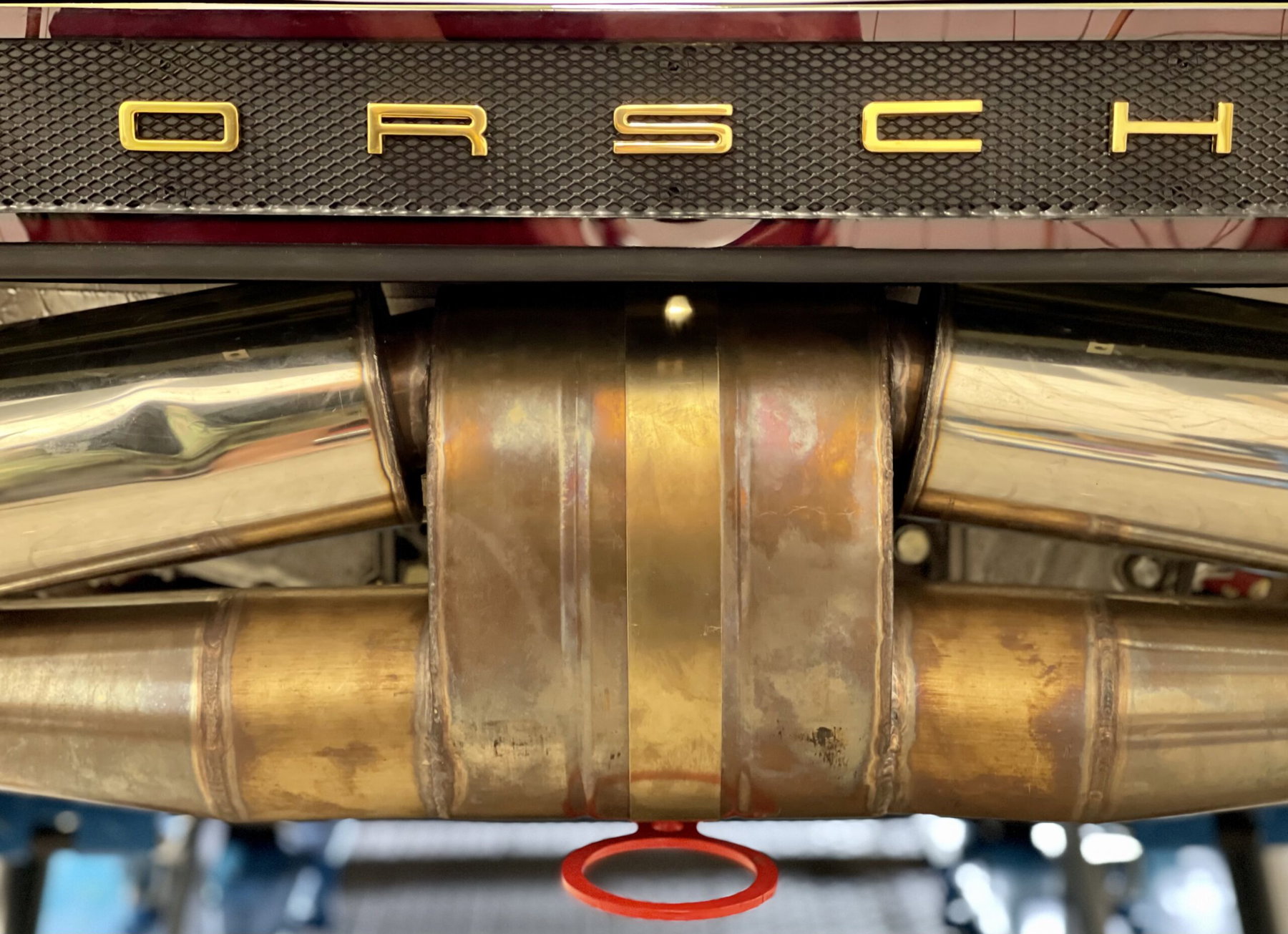
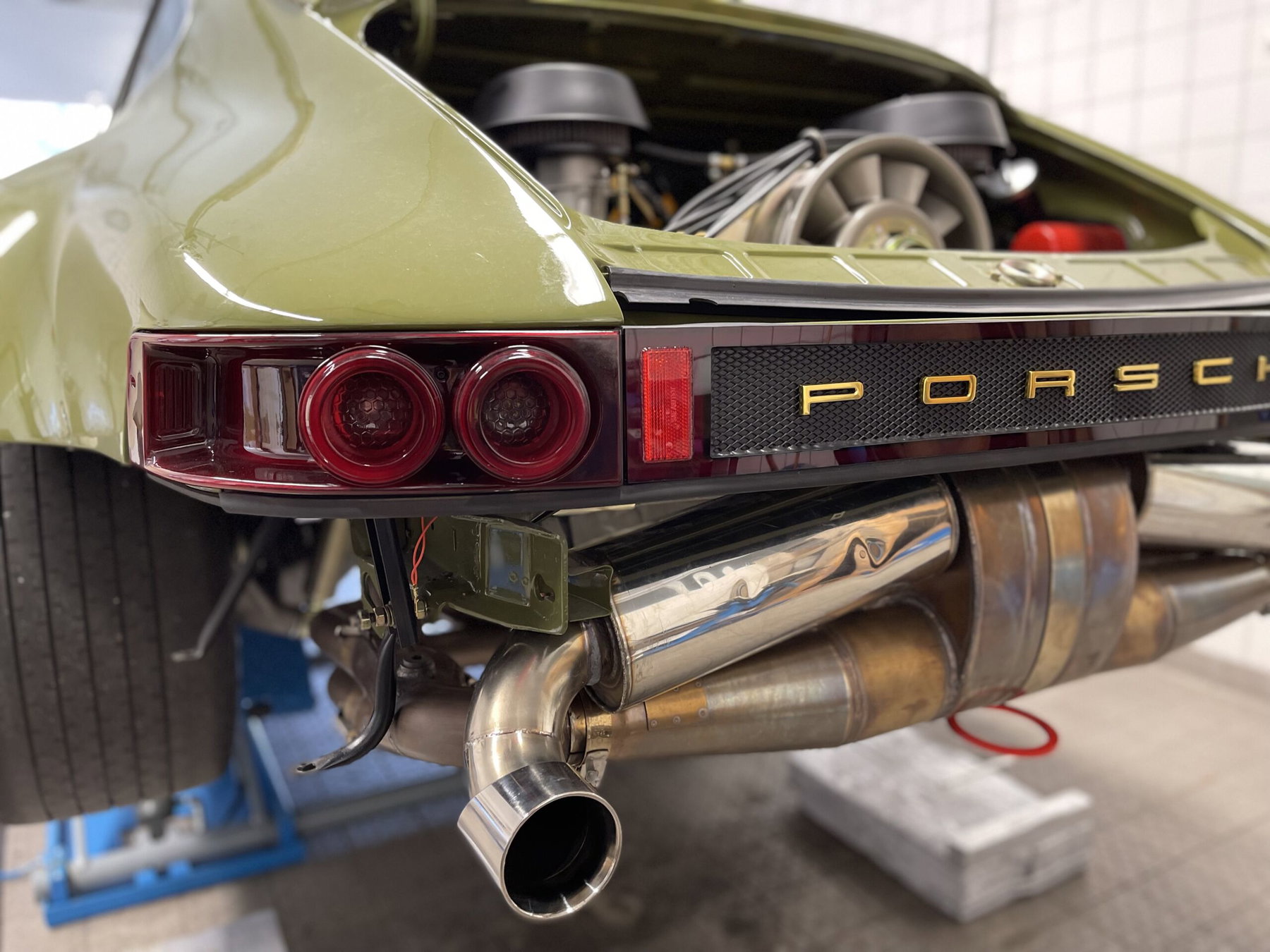
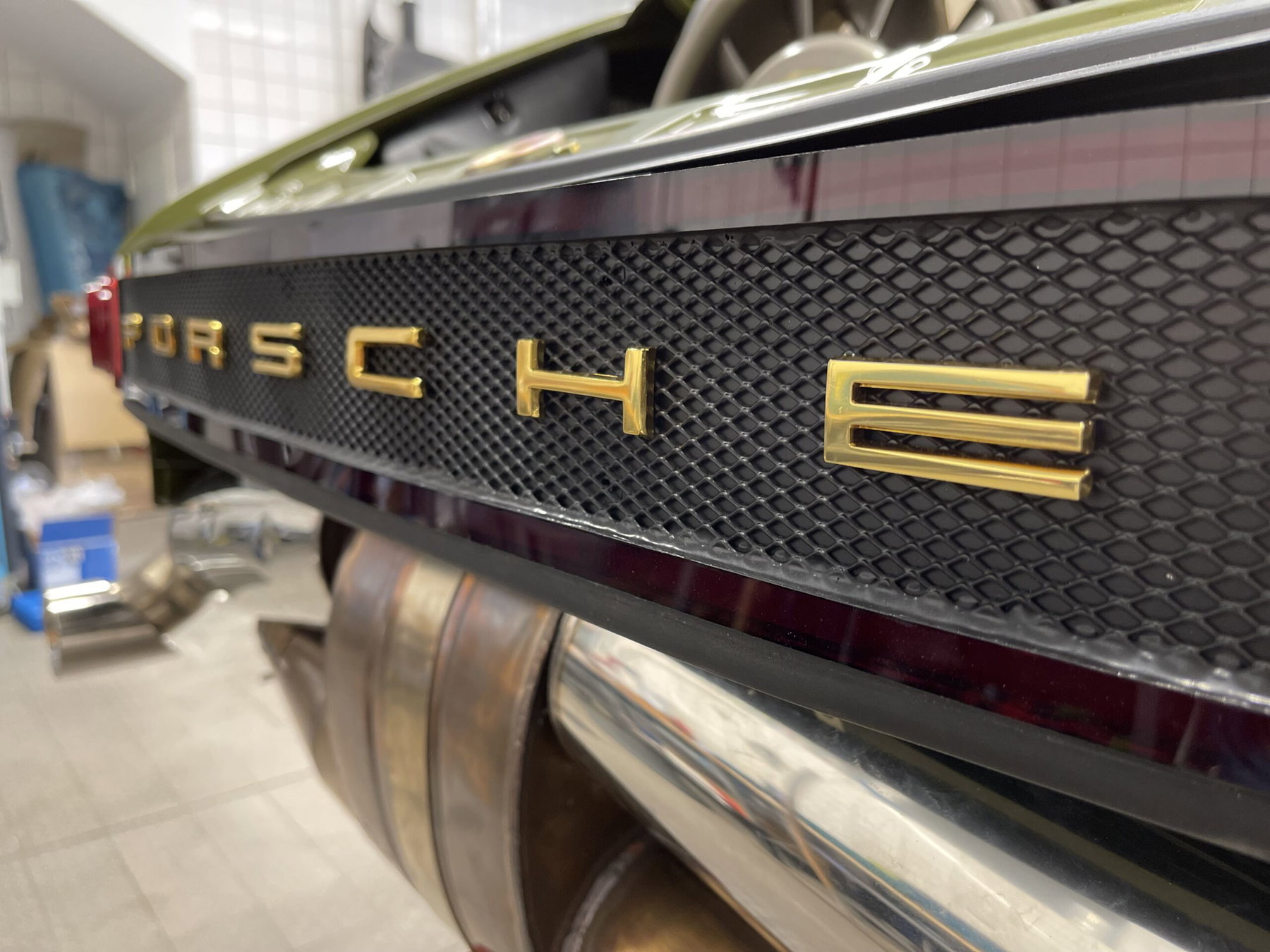
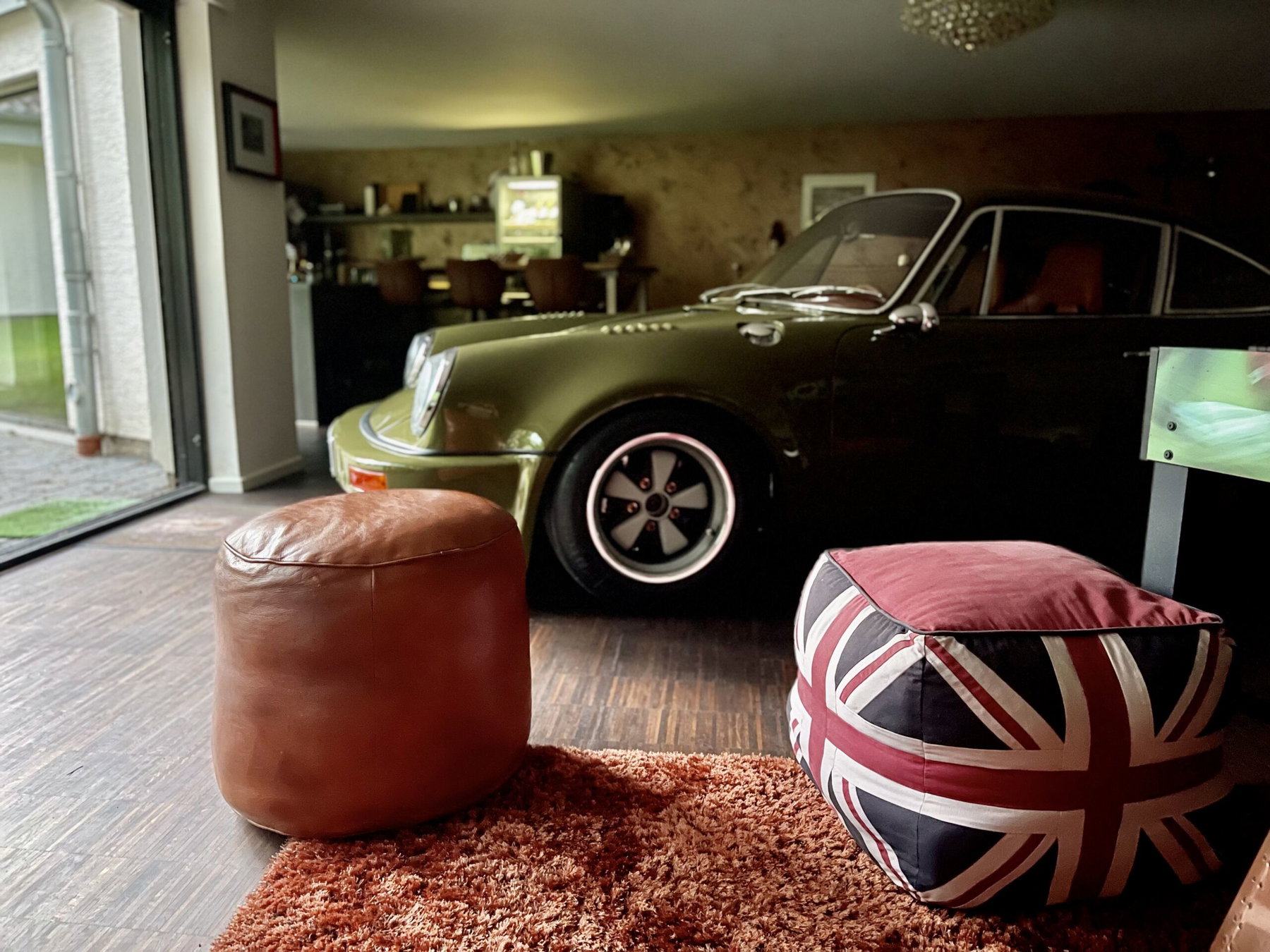
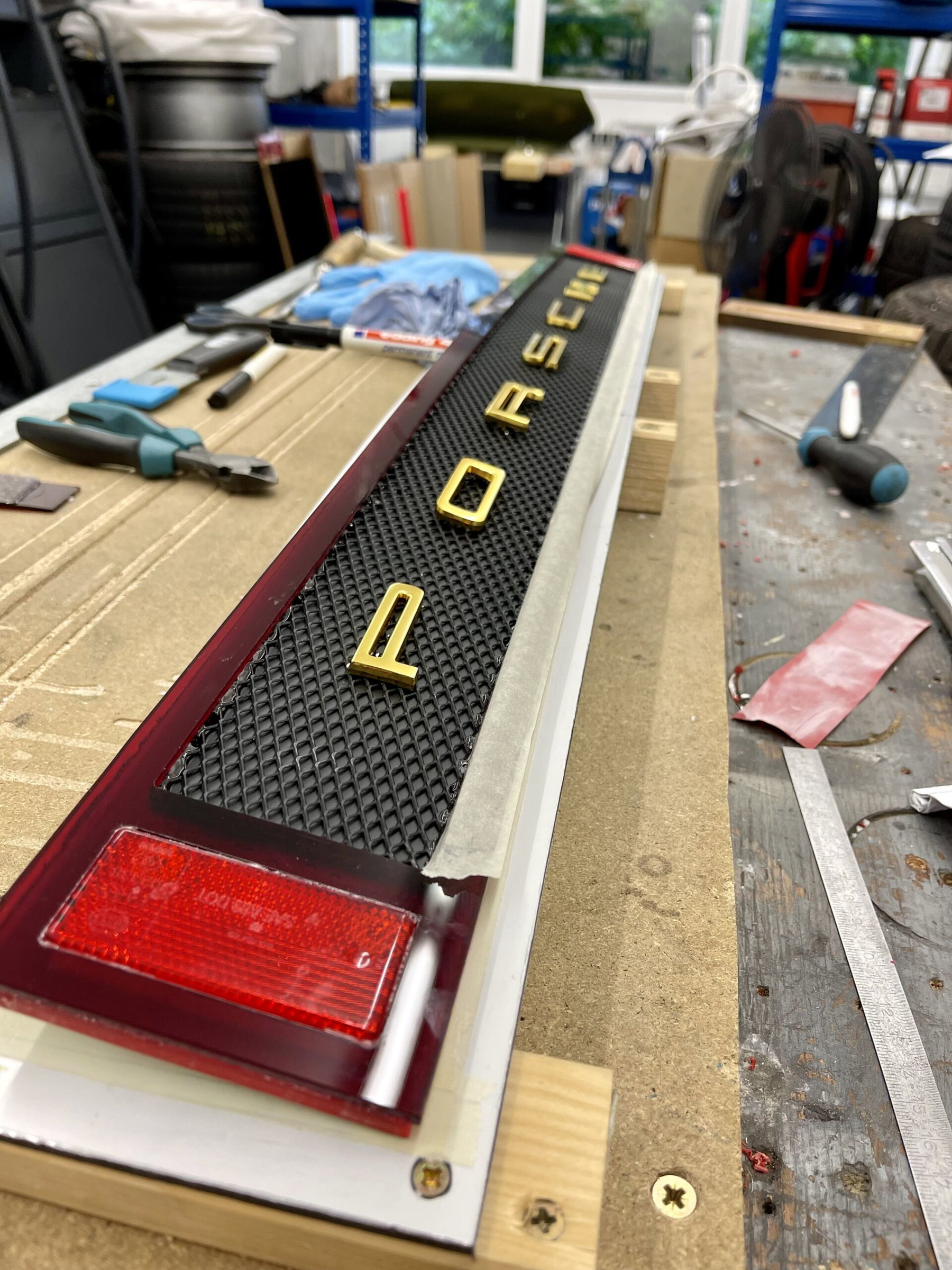
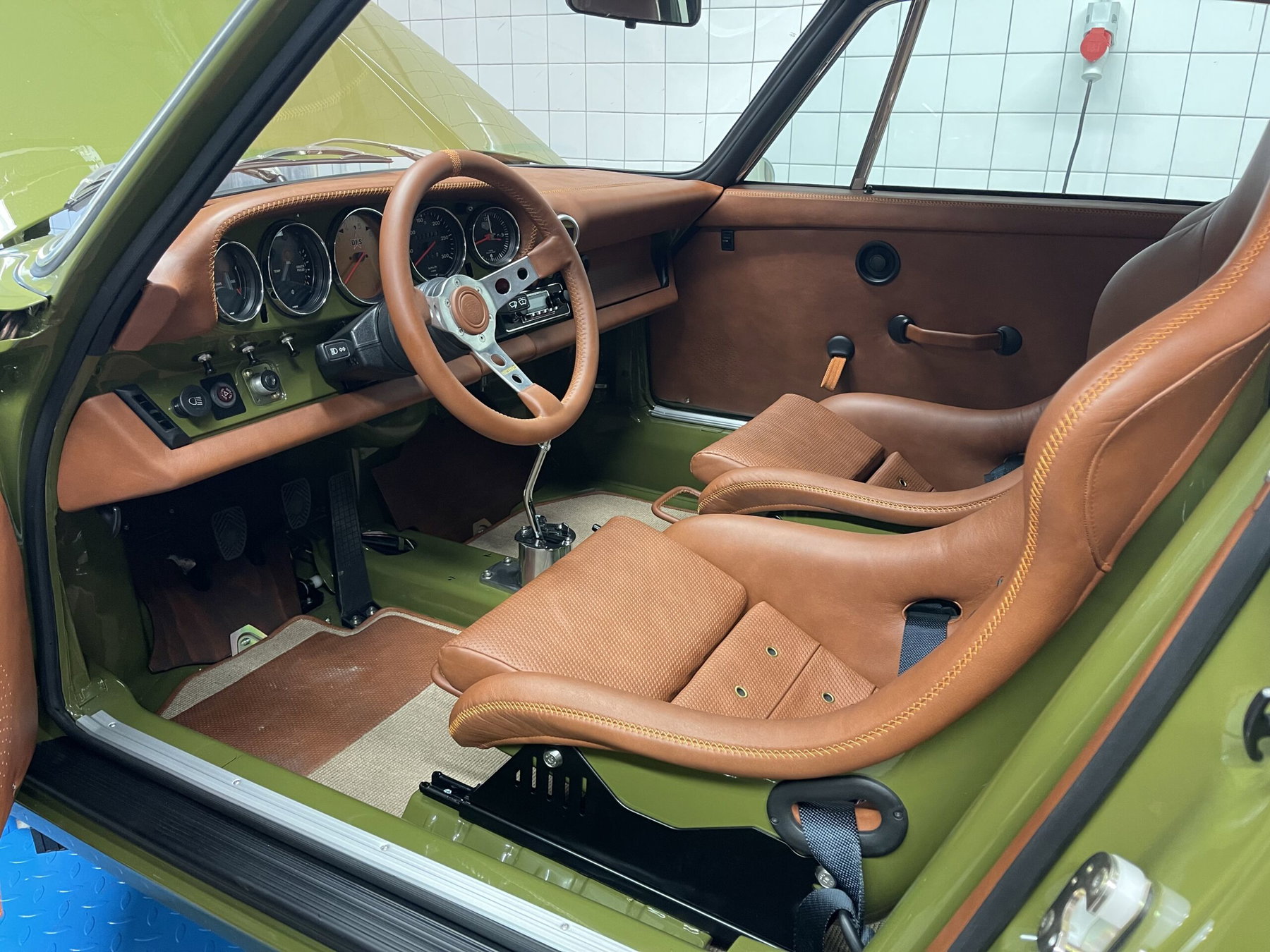
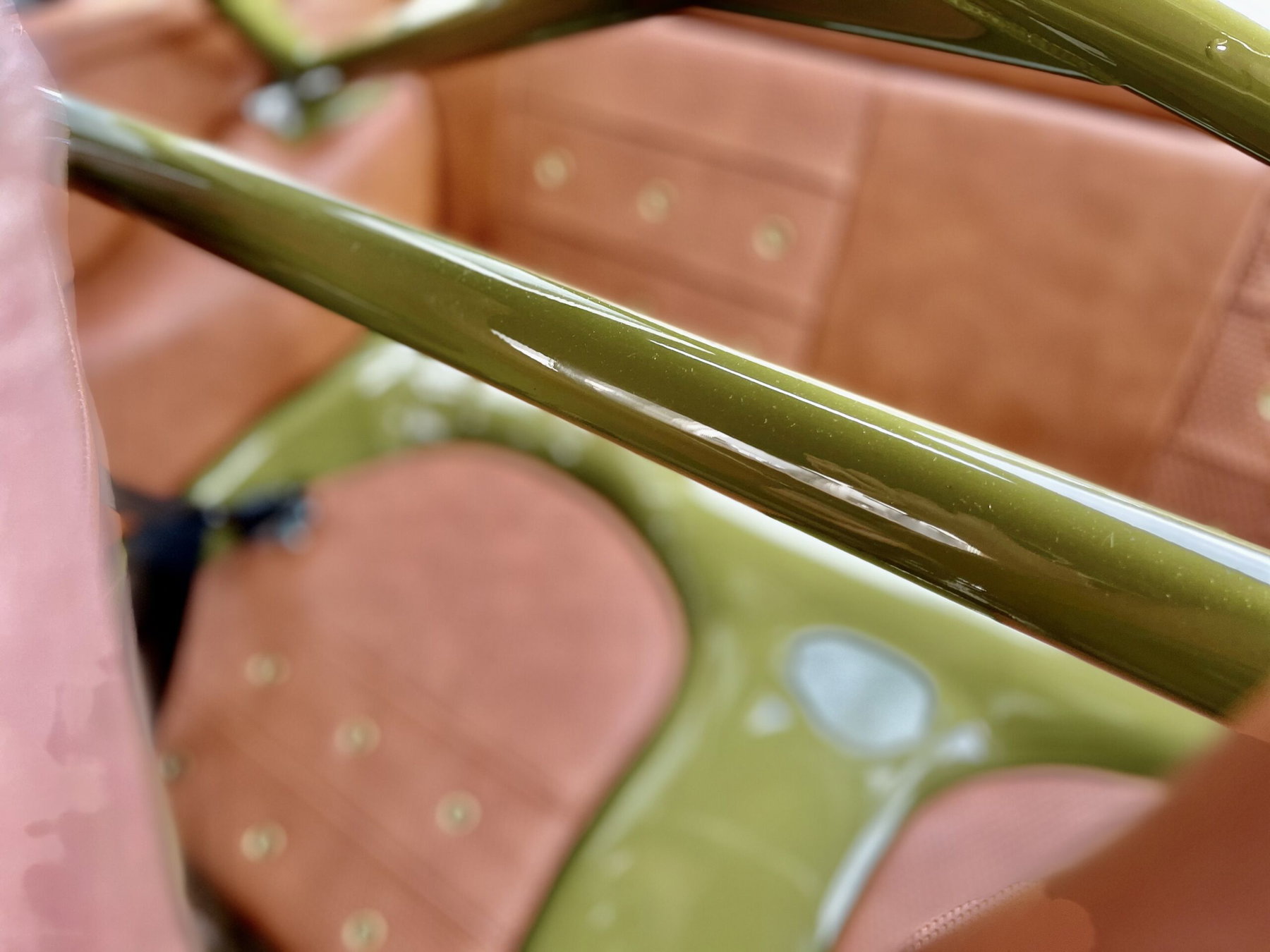
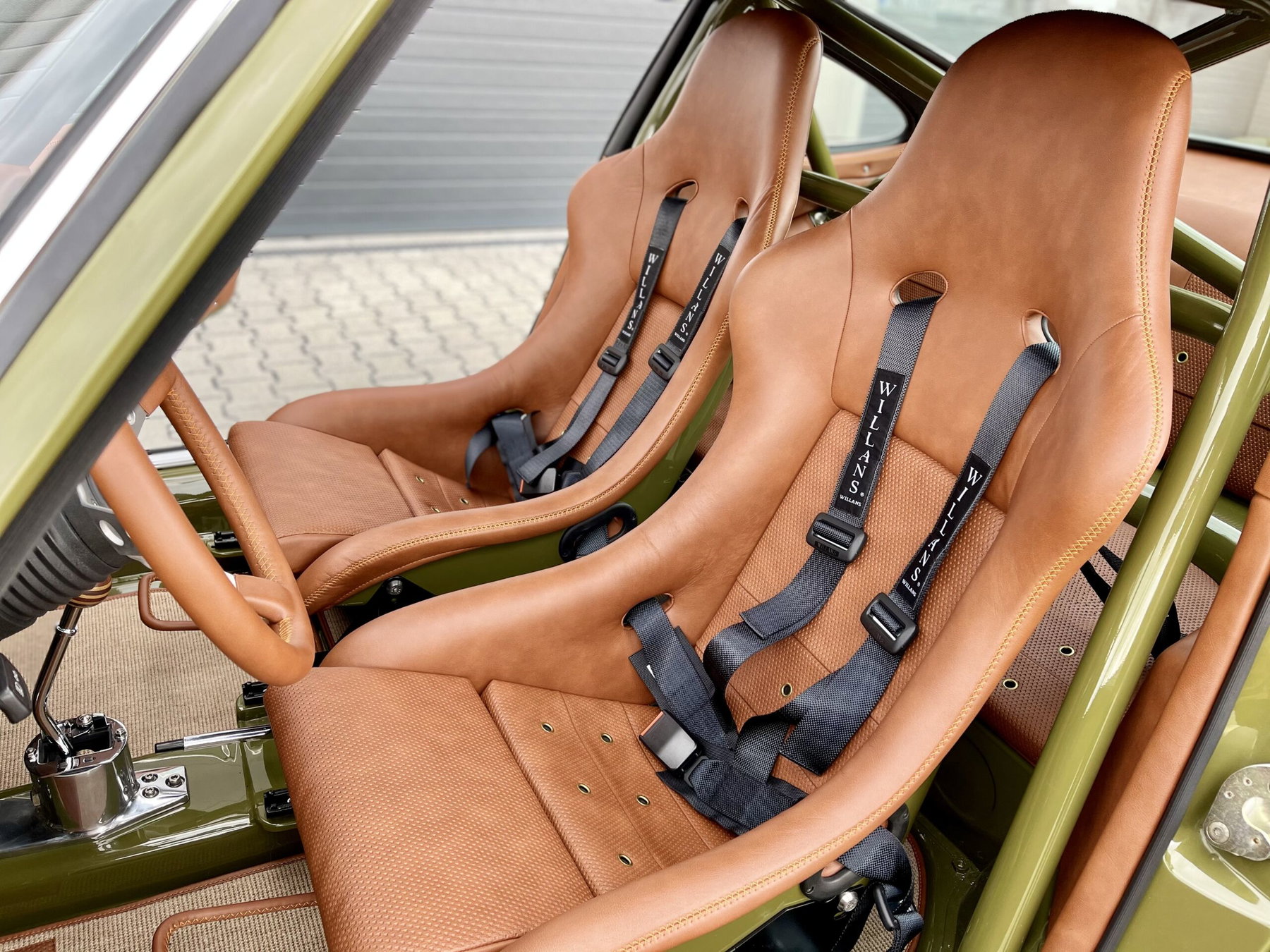
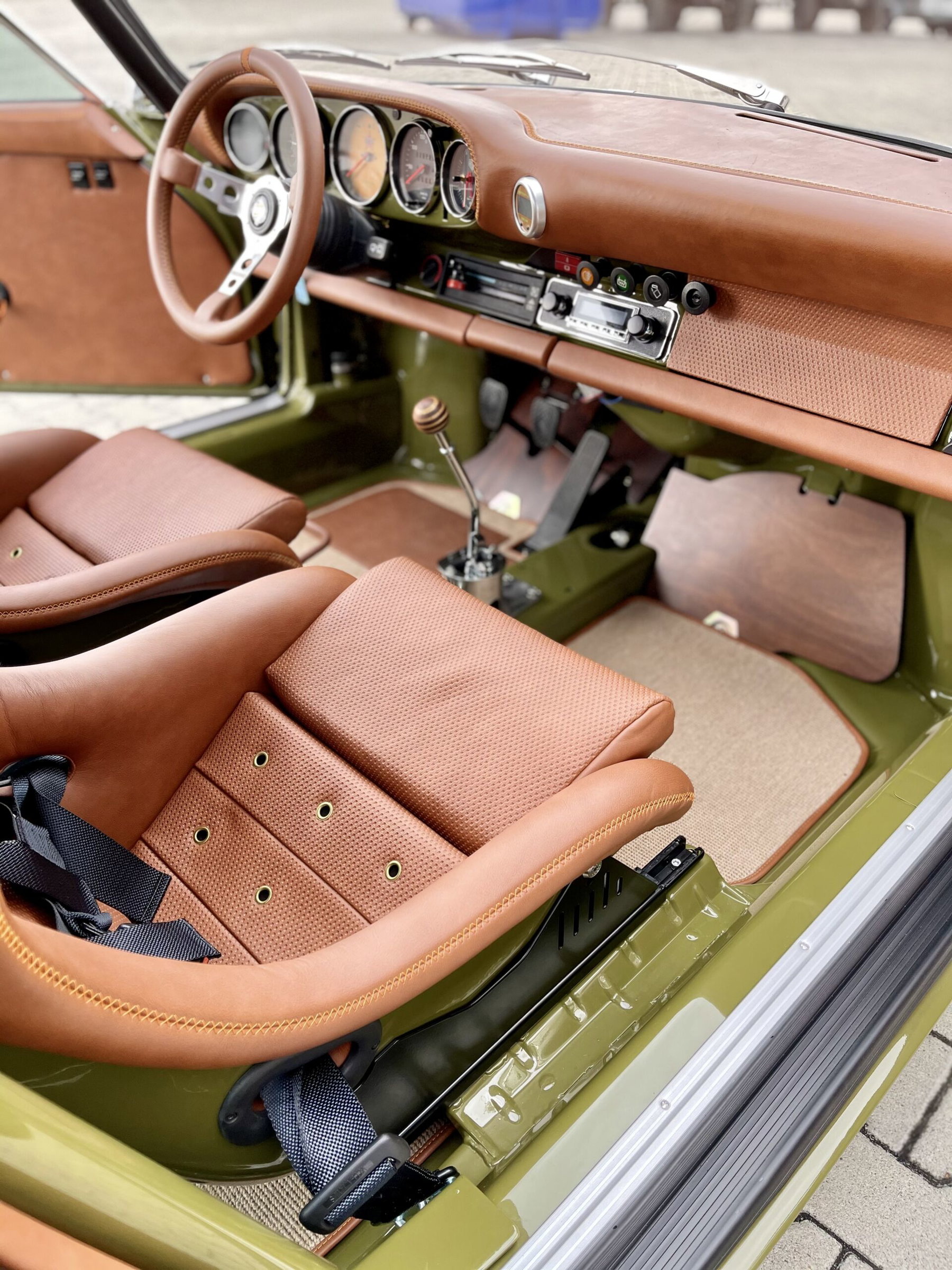
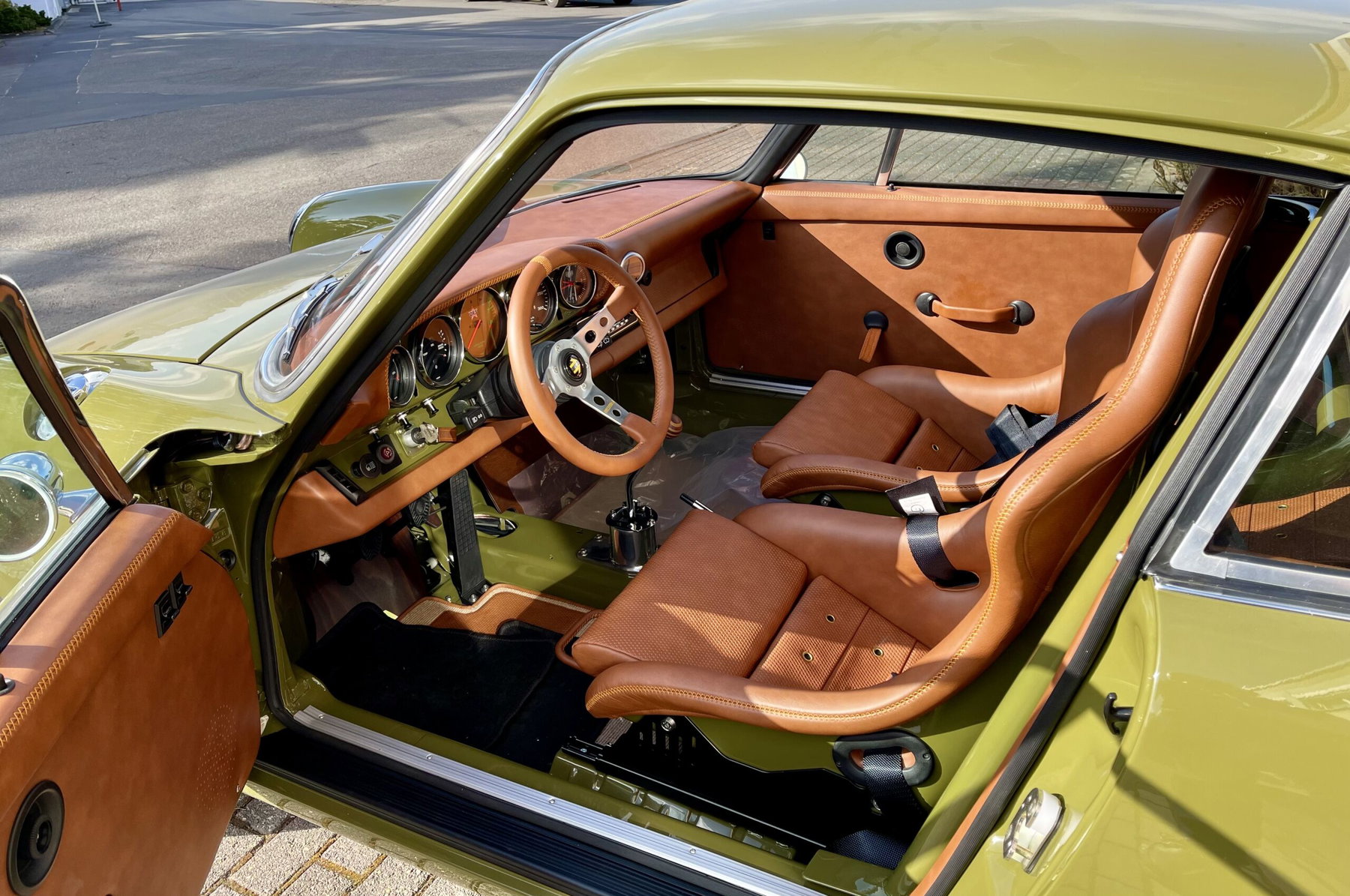
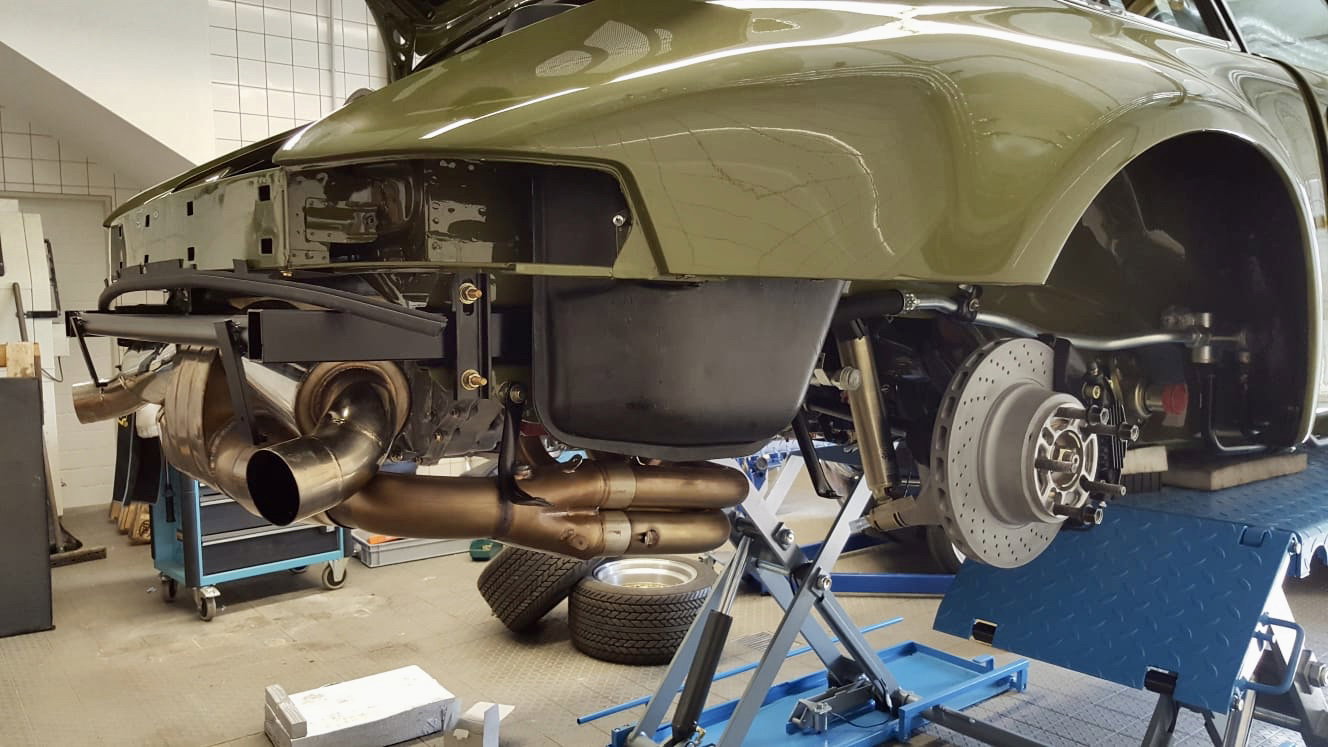
The vehicle was purchased in 2016 and was originally built in Japan in 1978 as a 911 SC. Over the following five years, from 2017 to 2021, the vehicle was restored without regard to cost. Complete stripping and KTL coating of all body panels, meticulous inspection of the body from the back seat. The paint color is (hopefully!) one-of-a-kind to this day. It is Ardbeg Green—exactly the same green found on Ardbeg’s cardboard packaging. Every single part, without exception, was meticulously repaired or replaced. In the process, several custom modifications were developed and implemented that cannot be purchased anywhere. For example, the front oil cooling system alone took 120 hours to complete. To prevent warm air from swirling under the car, this elaborate, hand-crafted metal chimney was developed. A special pressing tool was made specifically for the louvers in the front fenders. The hood with the ventilation slit was also handcrafted.
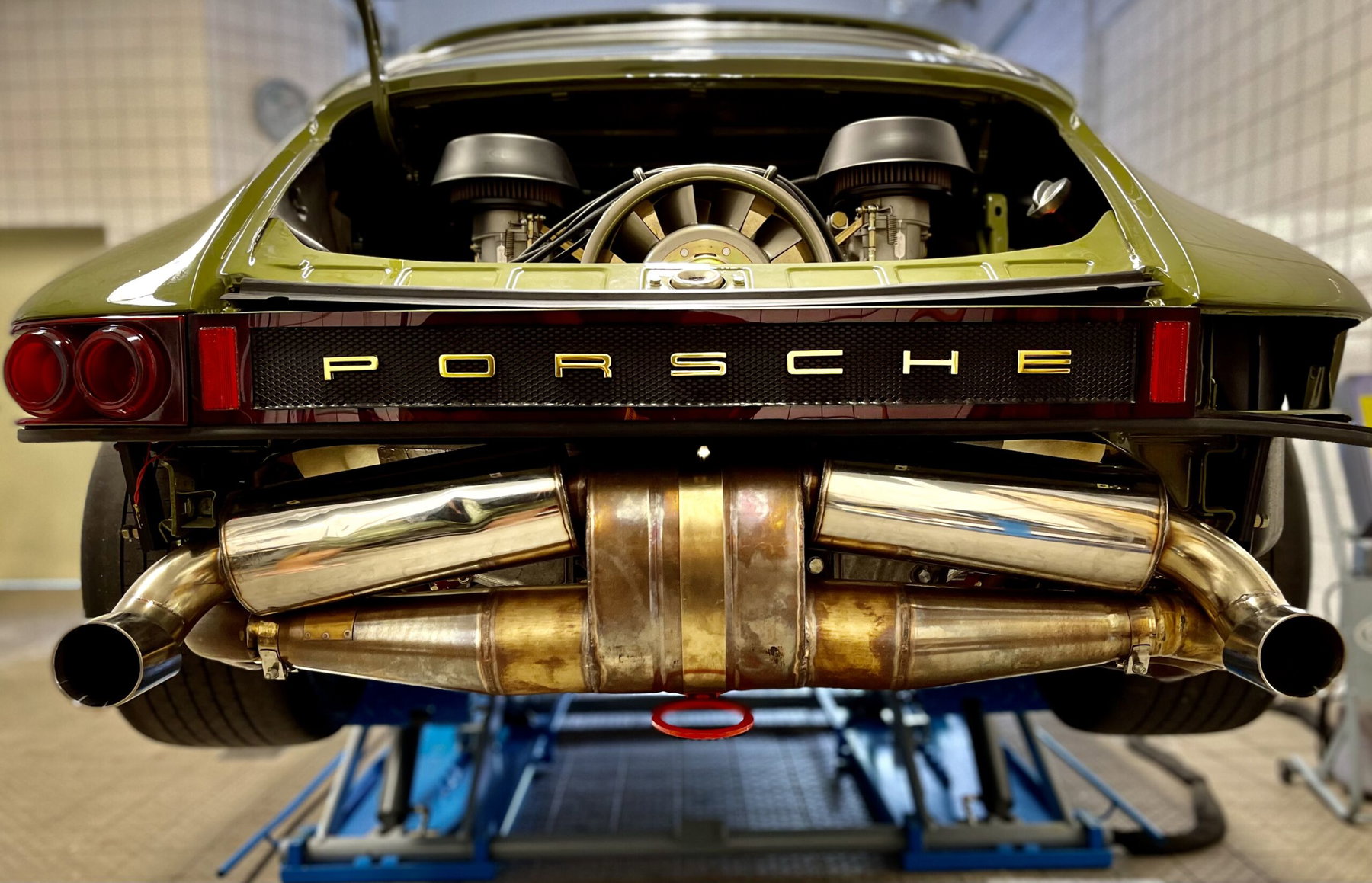
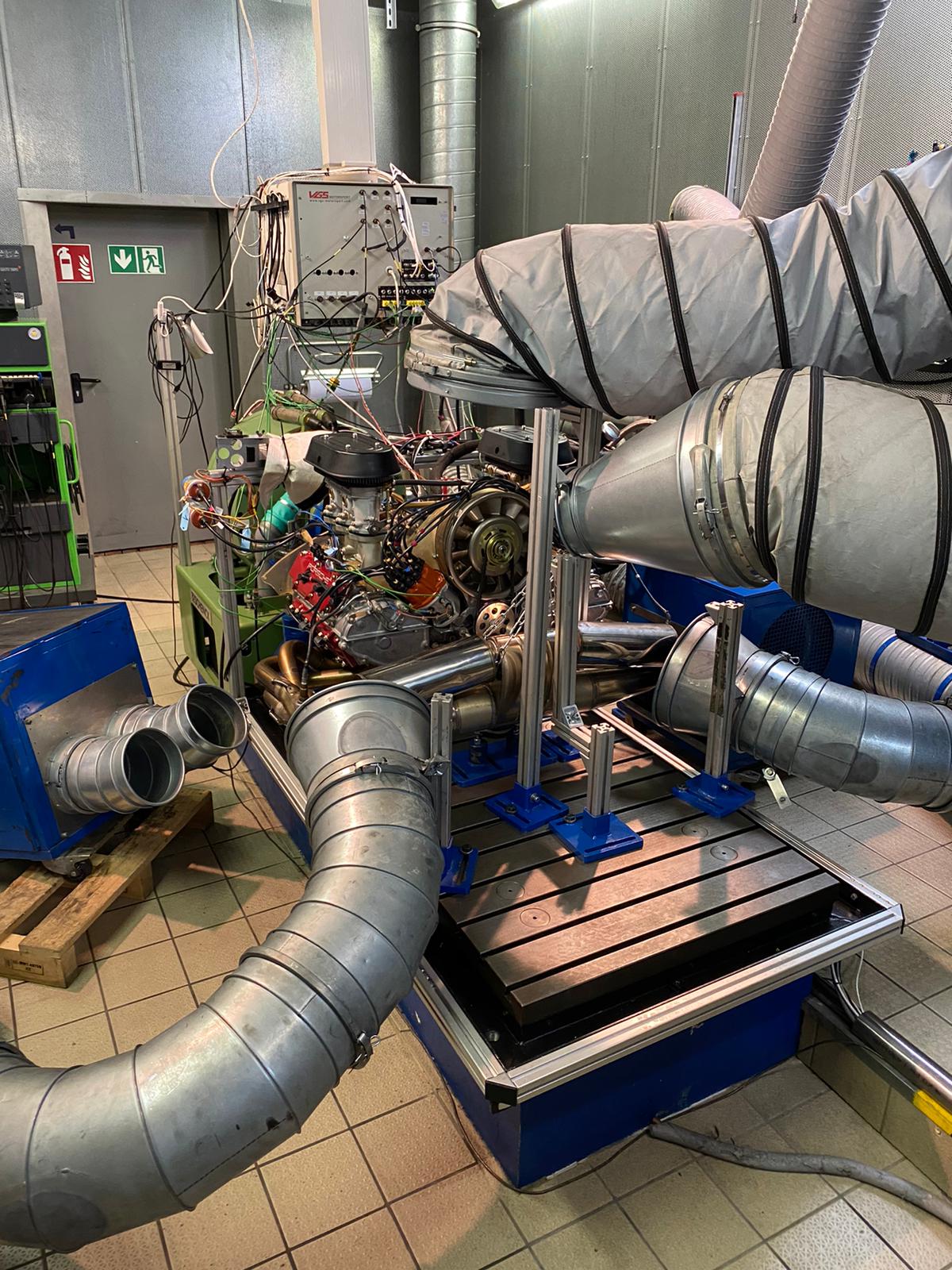
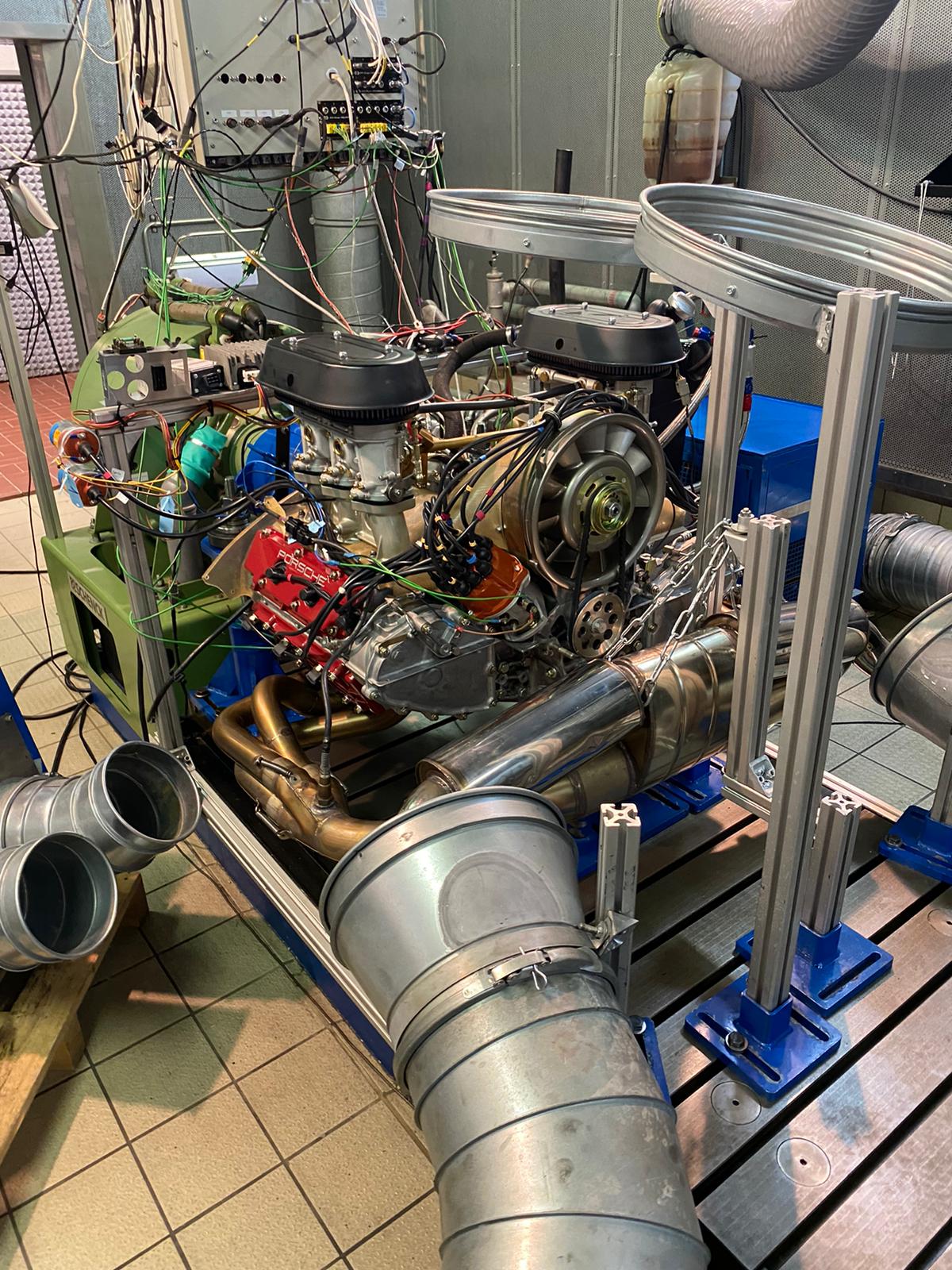
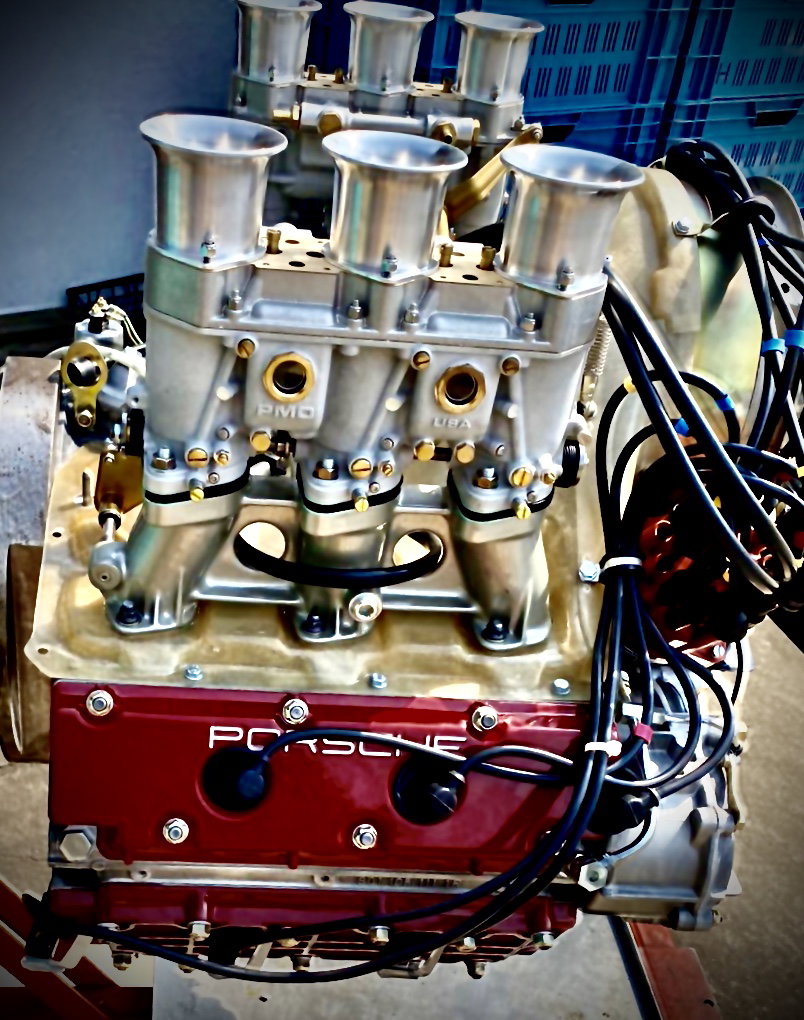
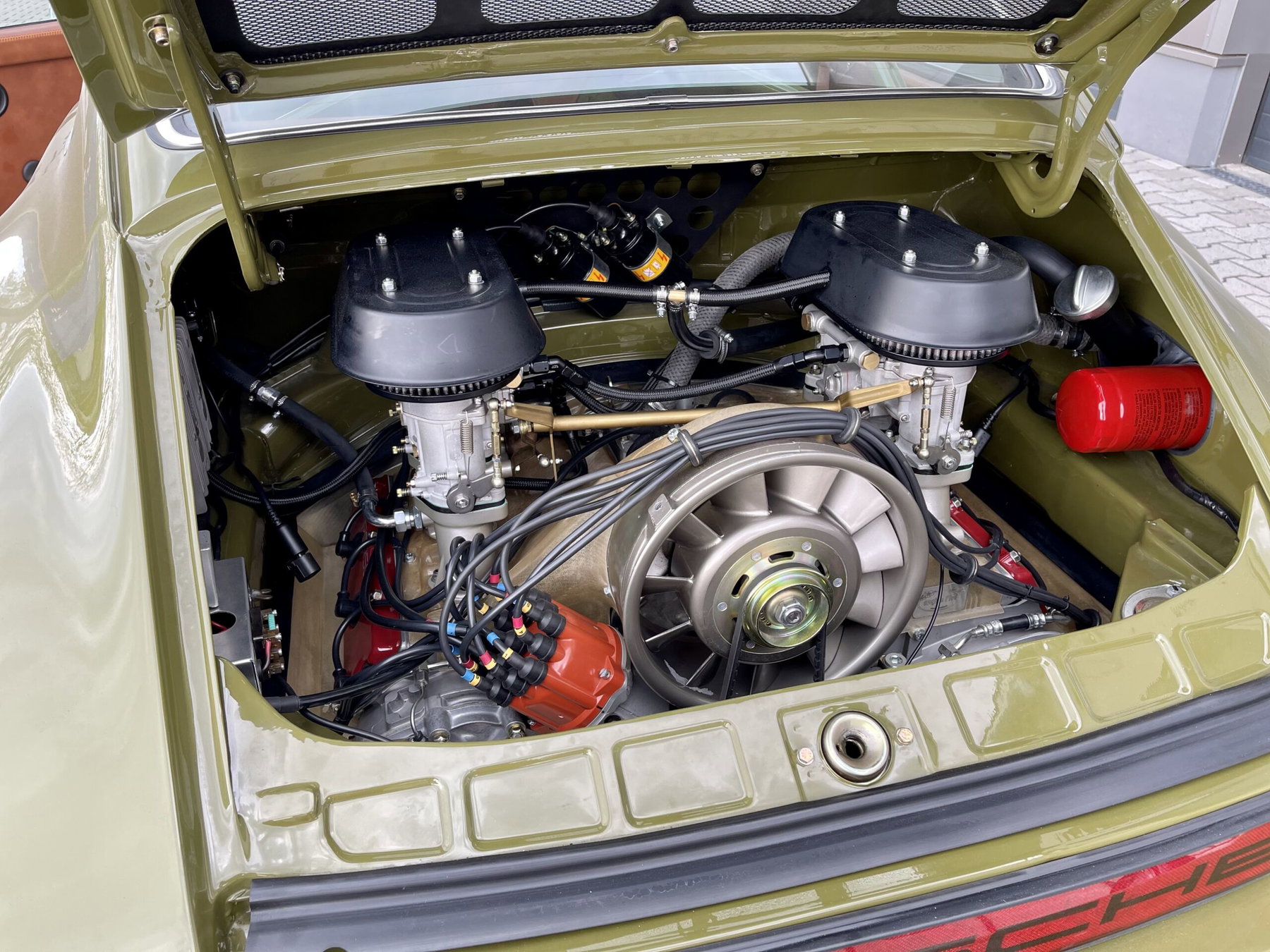
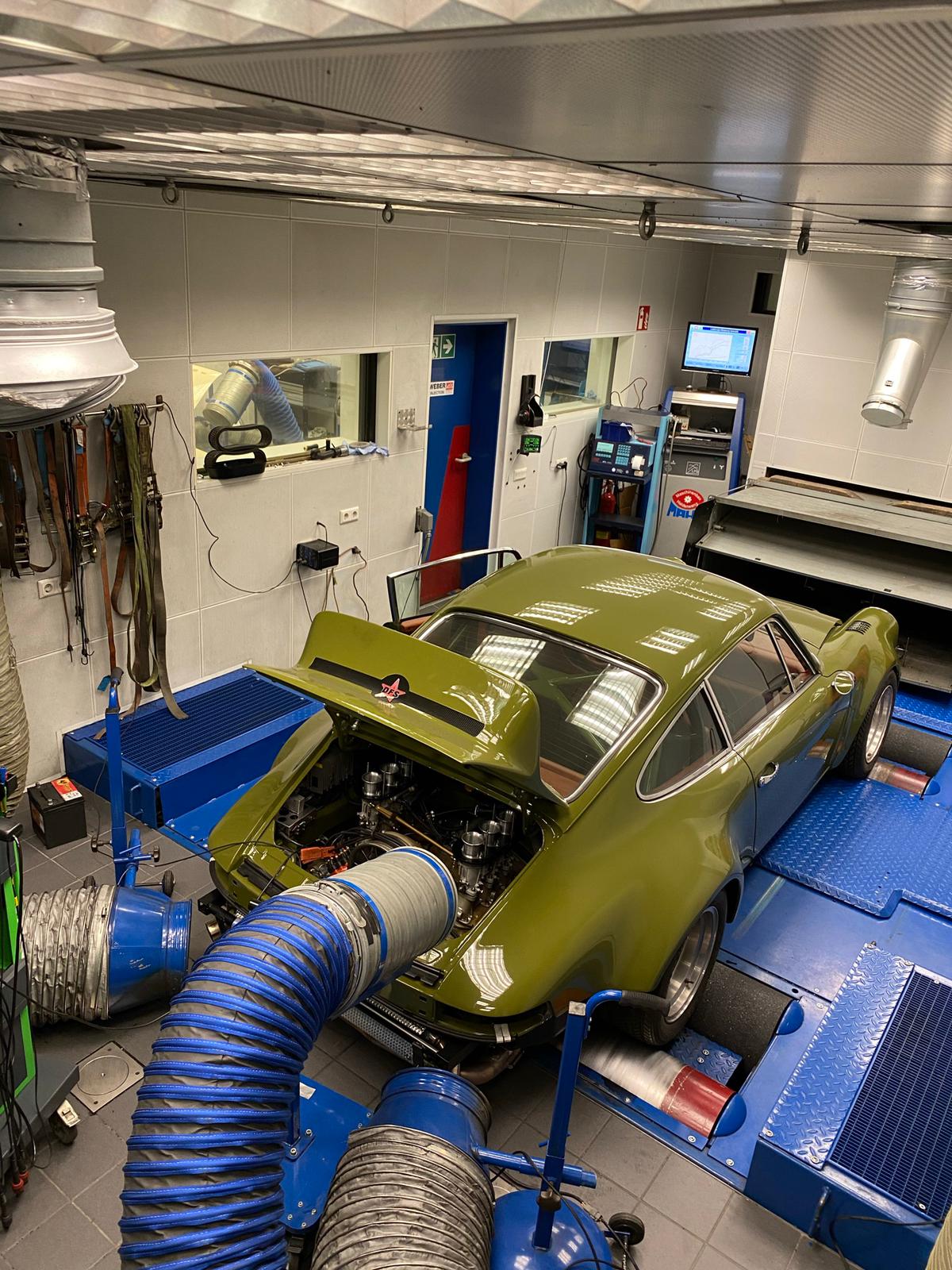
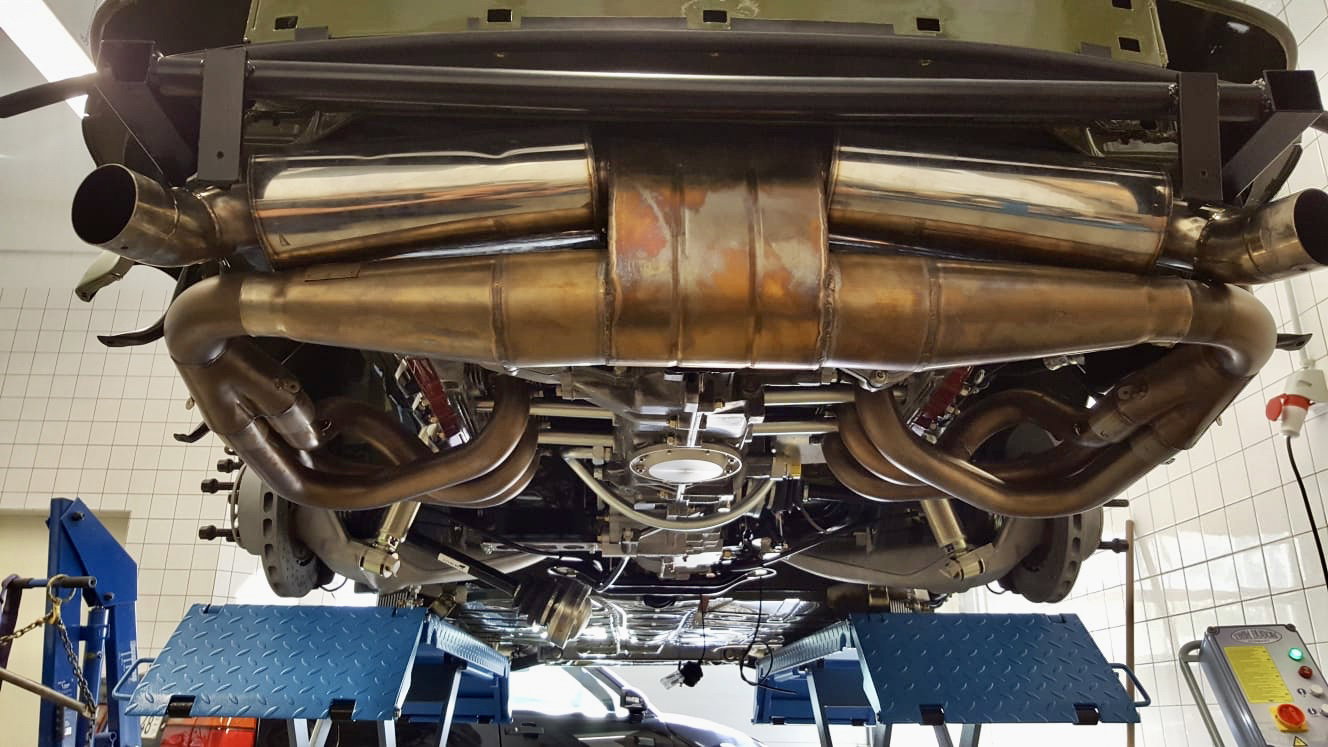
The engine is the original 930 engine. It has been bored out to 3.6 liters. The vehicle features a classic distributor for dual ignition and, of course, runs with a carburetor as was standard for the era. A few key points for the pros: hand-rounded ribs in the crankcase, a double-sealed crankshaft oil seal—combined with the large oil pump, this creates negative pressure in the crankcase. An 8-inch flywheel with a two-disc clutch. And so on and so forth—the result of this immense effort is impressive: 382 hp and 402 Nm meet a vehicle weight of 1,044 kg. The car accelerates like a 997 GT3.
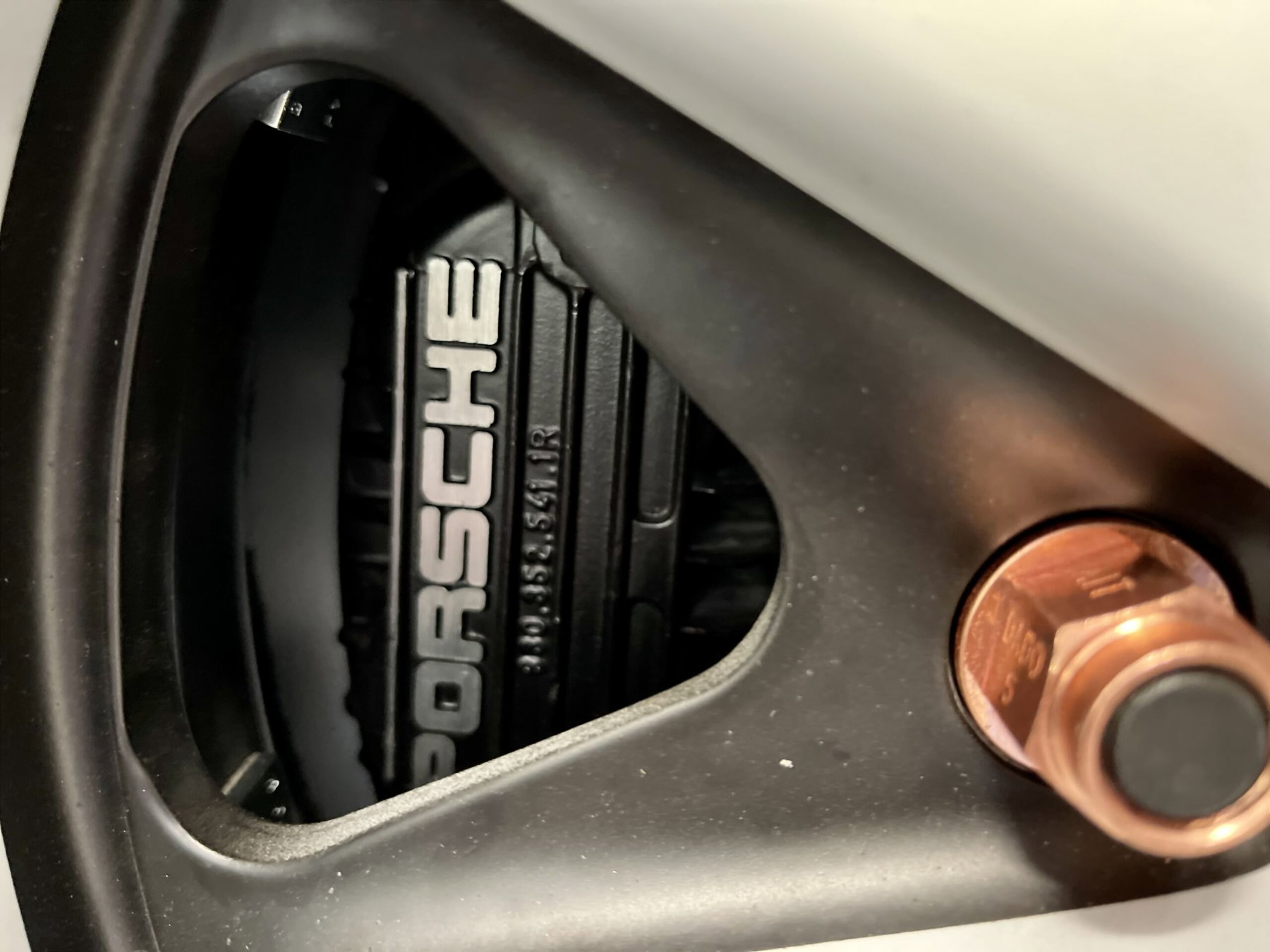
The transmission is a 915, but upgraded to the standard of a Porsche 935 under the motto “pack in everything possible.” In addition to all manner of mechanical reinforcements and optimizations, it features an external, electrically driven oil cooling system.
The suspension, typical of the G-model, is a torsion bar setup with KW Classic shock absorbers. Adjustable stabilizers, bumpsteer compensation elements, and so on and so forth. The axle geometry and basic setup were extensively developed at Manthey Racing on the chassis dynamometer and later tested and refined in road tests with AC-Schnitzer chassis legend Manfred Wollgarten. Compression and rebound are, of course, independently adjustable.
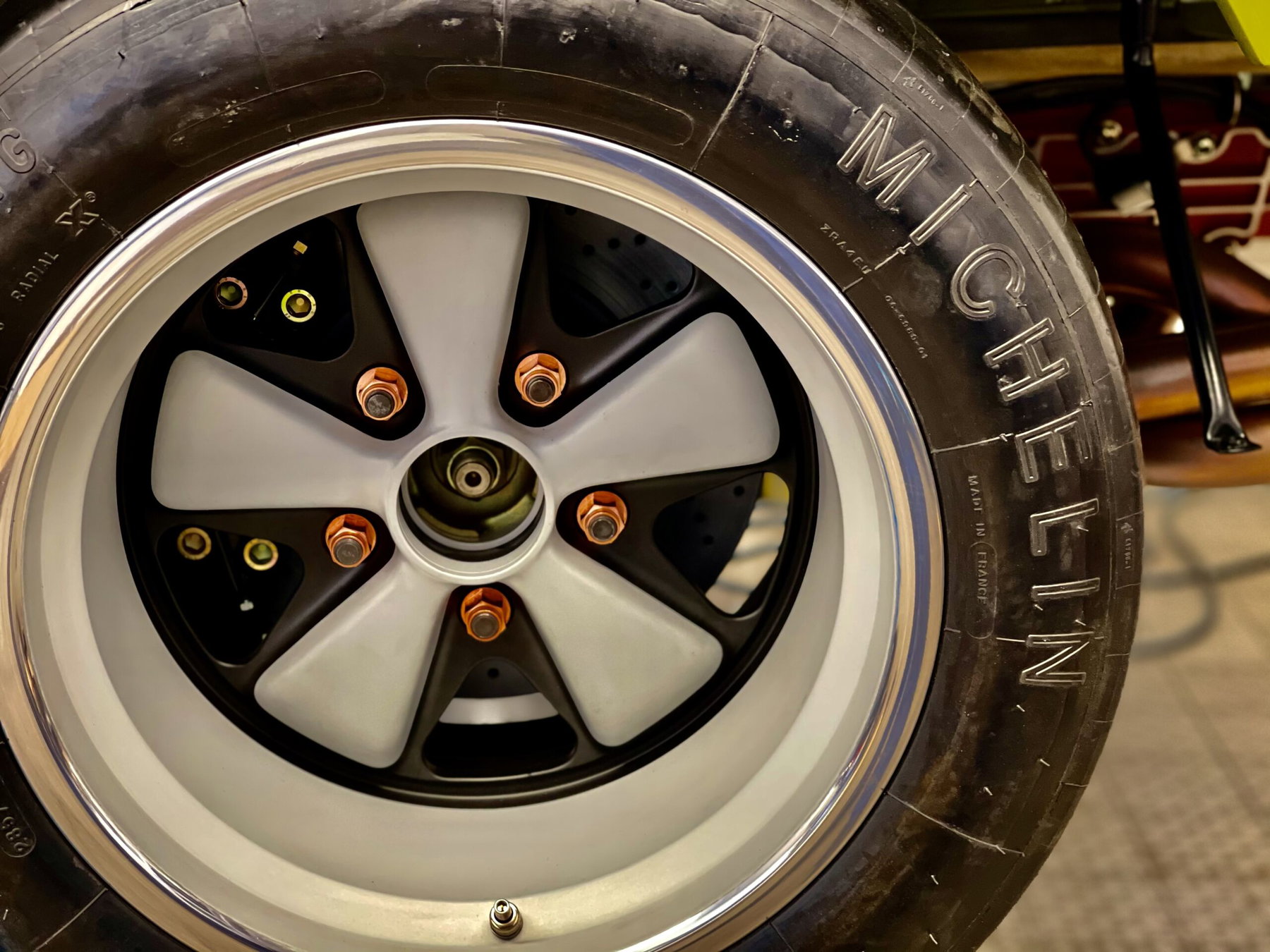
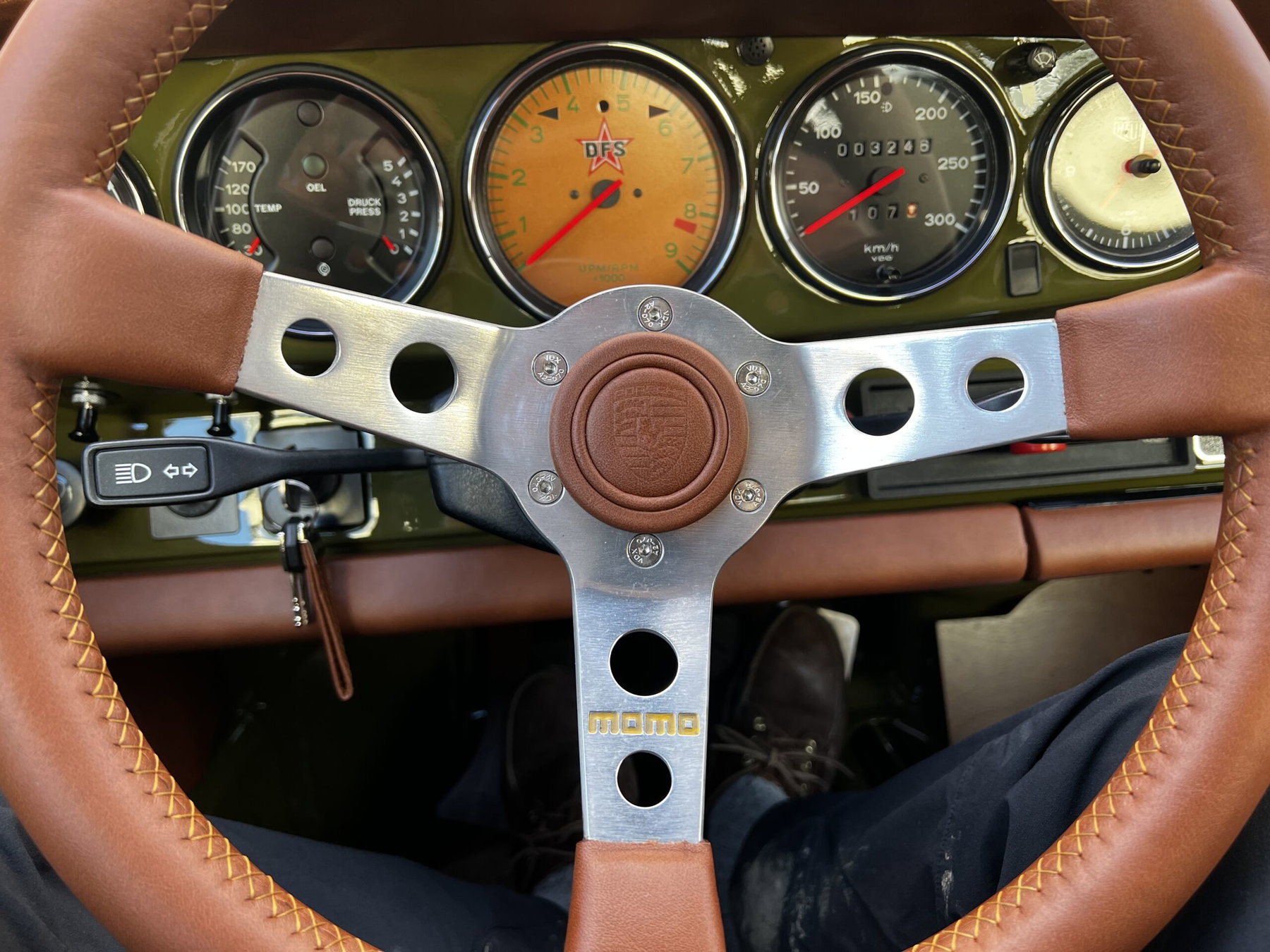
The wheel set consists of handcrafted Fuchs rims in 9J and 11J 15. Originally fitted with Michelin TB tires, the vehicle currently runs on Pirelli P7 tires. The brakes are sourced from the 930 Turbo/917. The pedal assembly has been modified for the throttle and brake so that the vehicle can be maneuvered exceptionally well using double-clutching.
In recent weeks, all critical components have been re-inspected and readjusted. As part of this, the vehicle underwent another wheel alignment check, the engine received a major service, and the vehicle was detailed inside and out with a ceramic paint sealant applied.
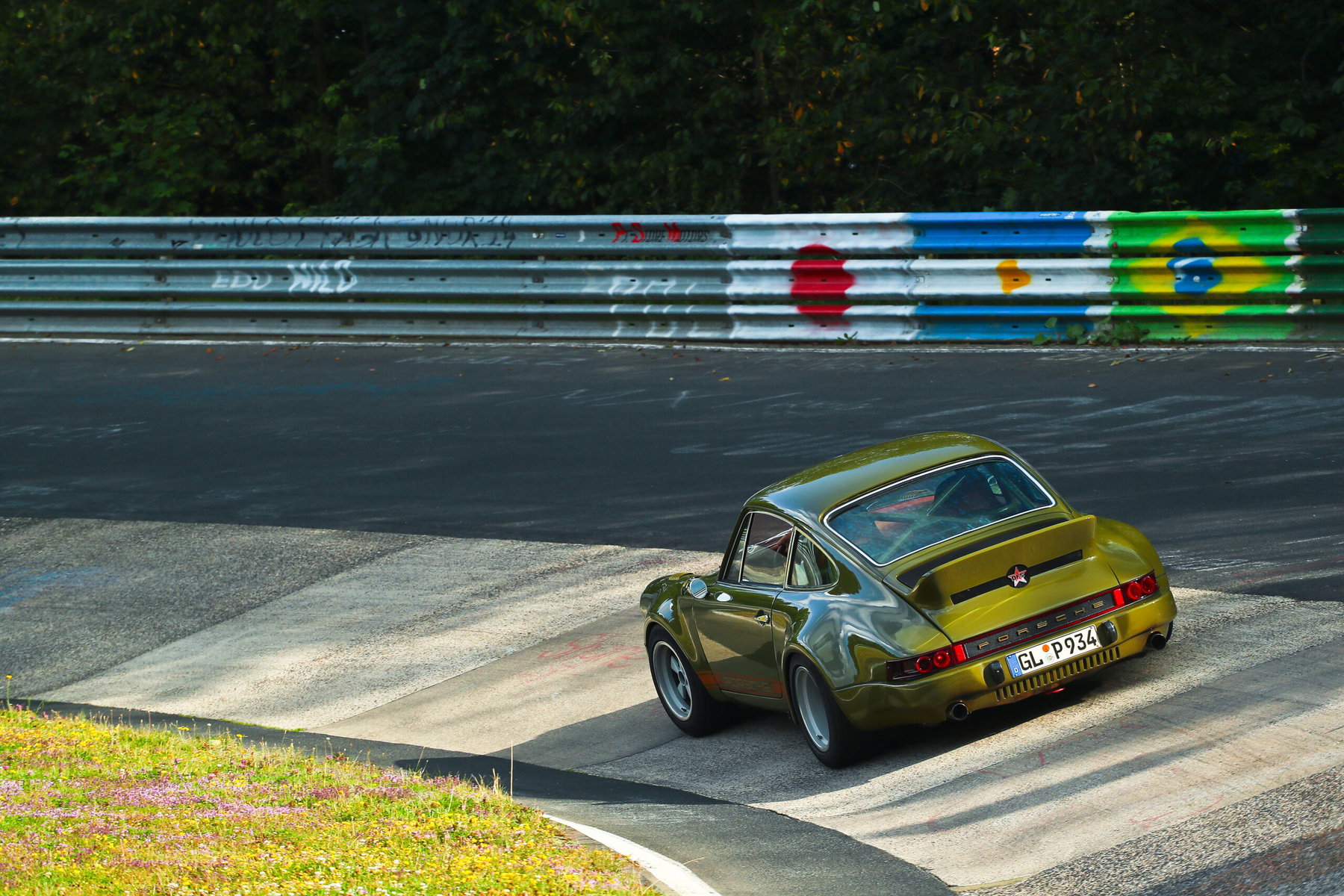
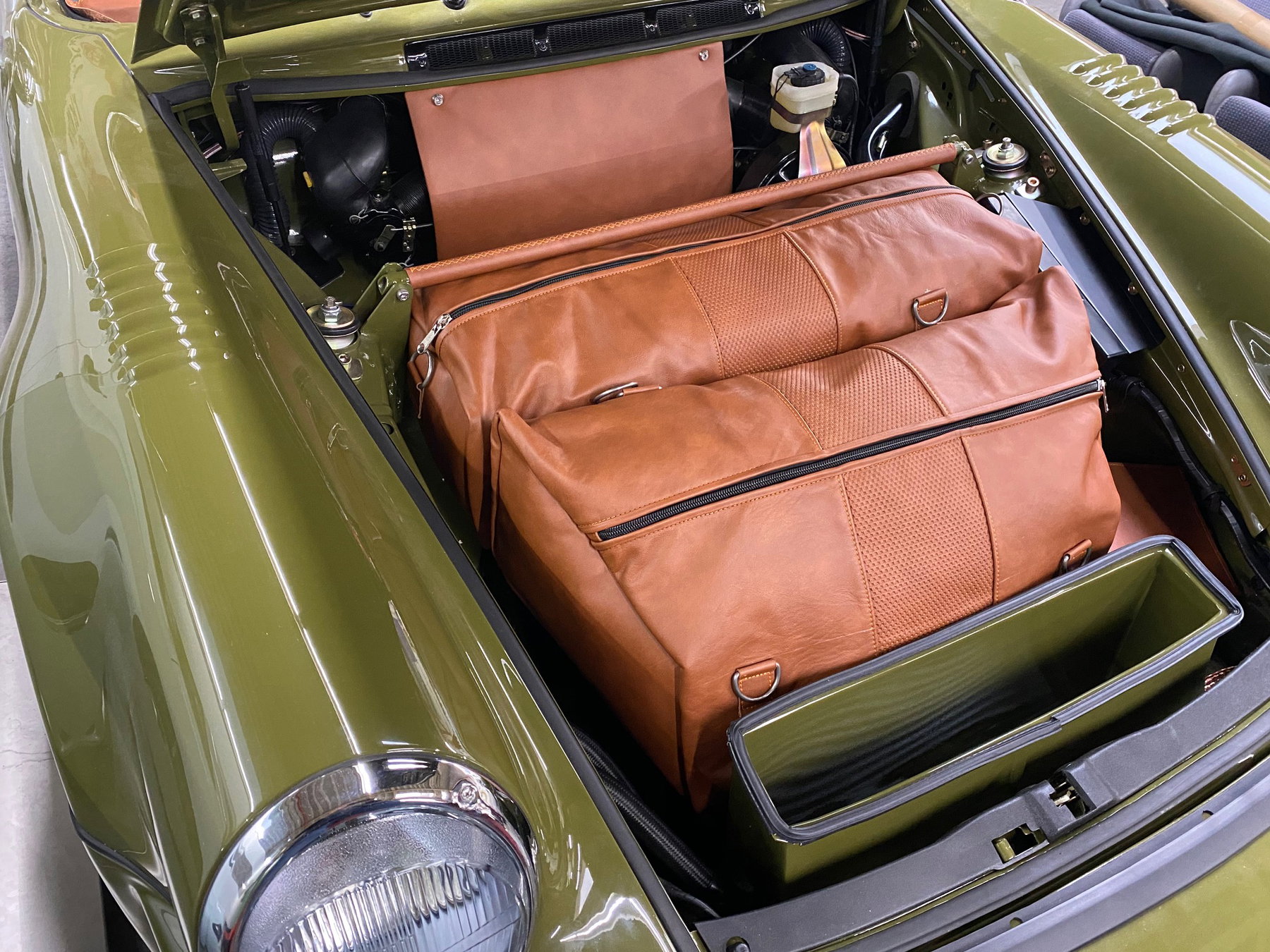
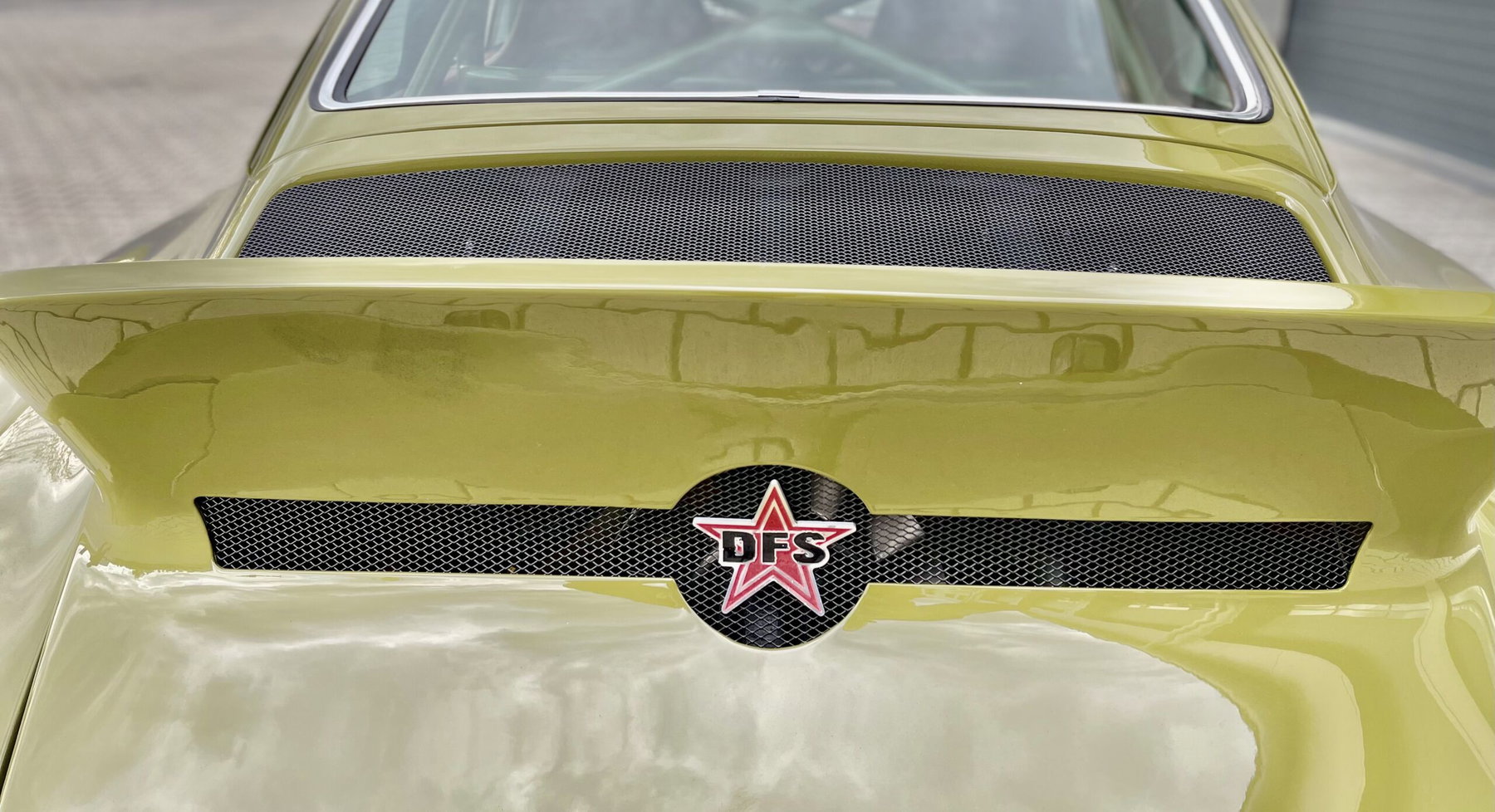
Of course, there is an expert report, countless photos, and extensive invoice documentation. The Porsche has been accident-free since its rebuild. An expert report for H-registration is also available. The vehicle has completed a single lap of the Nordschleife in tourist traffic; it has not been used in any races or club sports events. As an alternative to the Ducktail, the vehicle also comes with a ready-to-install whale tail and a handmade bag set.
Continue reading

 Germany


 1969
1969 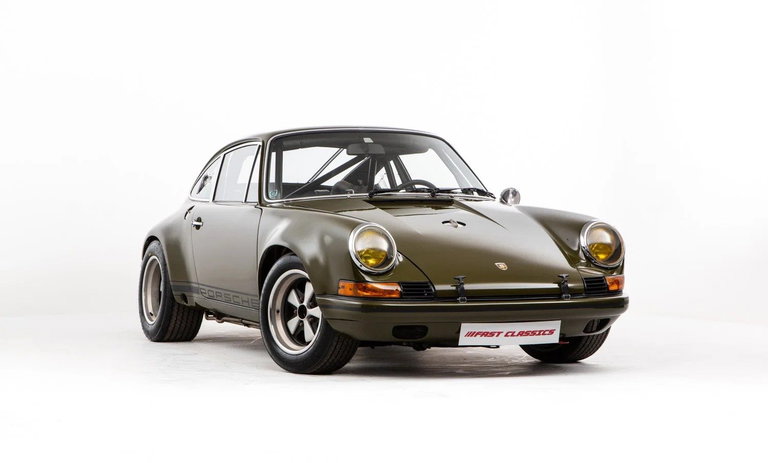
 1969
1969